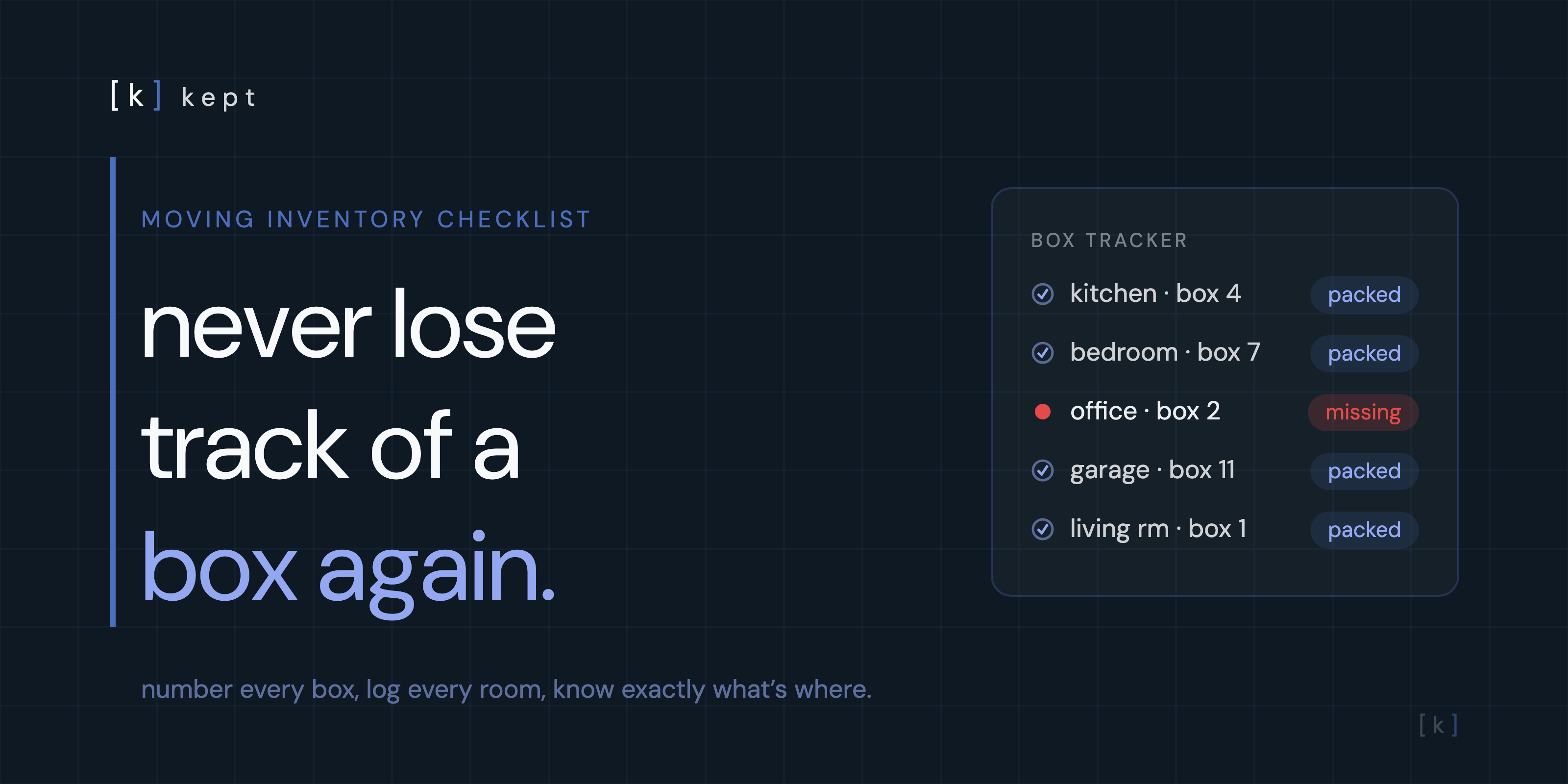
Moving Inventory Checklist: What to Track Before and After
Boxes get lost. Movers get blamed. Insurance claims get denied for lack of proof. A real moving inventory checklist stops all three, and it takes less time than you think.

table of contents
Creating your moving inventory list
A moving inventory list is a record of what you packed, matched against what actually shows up at the other end. Most people skip it and rely on memory. Then a box doesn't show up and nobody can say what was in it.
You don't need to catalog every sock and paperback. You need a system that's detailed where it counts and fast everywhere else.
What actually goes on the list
- A box number written on at least two sides, plus the room it belongs to.
- A one-line contents summary for each box, not just "kitchen" but "kitchen: mugs, cutting boards, mixing bowls."
- A condition note for anything already scratched, dented, or worn before the movers touch it.
- A separate, more detailed record for anything valuable enough to insure or replace.
Skip the box-level detail for books, linens, and anything replaceable for under $30. Spend your time on the stuff that's expensive, sentimental, or fragile. That's where a missing-item argument actually costs you money.
When to start
Two weeks out is enough time to work room by room without rushing, and early enough that you can still return a box to a closet if you change your mind about packing it. Starting the night before means you're inventorying nothing, you're just stacking boxes and hoping.
Organizing boxes by room
Room-by-room is the only organizing system that survives an actual move. Pack a box, label it with the room it's going to, number it, and log it before it leaves your hands. Trying to organize by category across the whole house instead just means five half-packed boxes sitting open in every room at once.
Labeling that actually works
- Write the destination room and box number on the top and at least one side, since boxes get stacked and stacked boxes hide their tops.
- Use a full sentence, not a single word: "office 2: monitor cables, desk lamp, file folders" beats "office."
- Photograph the open box before sealing it and save the photo next to the box number in your list.
Spreadsheet, paper, or app
A spreadsheet works fine right up until moving day, when you're standing in a driveway with a marker in one hand and no laptop open. Paper works until it gets left in a box you can't find. A phone-based app holds up because your phone is already in your hand while you pack and while you unpack.
The real question isn't format, it's whether you'll still be using it in six months. A moving list on a legal pad gets thrown out after the last box is empty. An app that also tracks your appliance warranties and item details gives you a reason to keep opening it.
Color-code by room, search by anything
Tag each item to a space when you unpack, then find anything by name, room, or photo later. No more "which box did the mixer go in?"
see how it workskept is reader-supported. When you buy through links on this page we may earn a small commission, at no extra cost to you. It never changes what we recommend.
Room-by-room packing order
- ☐ Storage areas and garage (least disruptive to pack first)
- ☐ Guest rooms and spare bedrooms
- ☐ Living areas and dining room
- ☐ Bedrooms, leaving one set of essentials unpacked
- ☐ Kitchen, packed last since it's used daily
- ☐ Bathroom essentials bag, packed the morning of the move
High-value items that need their own record
Most of what you own doesn't need a detailed record. A handful of things do: electronics, jewelry, art, musical instruments, anything with a serial number, and anything you'd genuinely be upset to lose.
What to record for each one
- Make and model, so a replacement search doesn't start from scratch.
- Serial number, photographed directly off the sticker instead of typed, since a single transposed digit makes it useless.
- Estimated value or the original purchase price if you still have the receipt.
- A photo from before the move, showing existing condition.
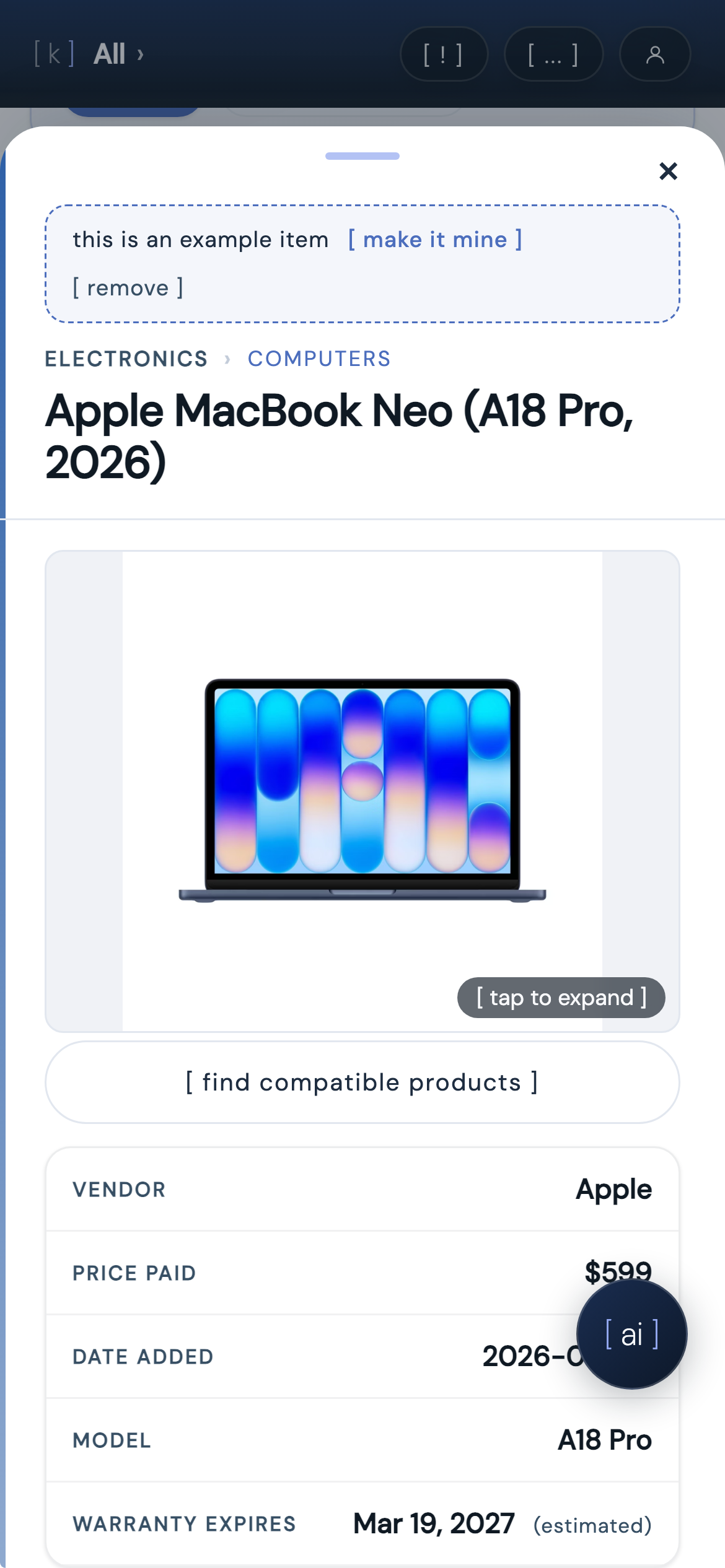
everything an insurance adjuster or a warranty claim would ask for, saved once.
This is also where a barcode scan beats typing. Point a phone at the box or the serial sticker and the model number, and often the full spec sheet, gets saved automatically. Doing this for twenty items takes less time than typing five of them by hand.
If something goes missing or gets damaged
Professional movers build an inventory for exactly this reason. Before loading the truck, a mover typically walks through and tags each item with a numbered sticker, noting existing scratches, dents, or wear on a paper or digital form you both sign. That signed form is what protects you if something shows up broken.
You can do the same thing yourself even if you're not hiring movers. The moment something looks off when a box is opened, compare it against your pre-move photo and note the difference immediately, not weeks later when the details are fuzzy.
If an item is missing or damaged
- Photograph the damage or the empty space where the item should be, right away.
- Check your list for the box number and room it belonged to.
- File a claim with the moving company or your insurance within their stated window, often 9 months for interstate movers under federal rules, but shorter for many insurance policies.
- Include your pre-move photo, the serial number if you have one, and the estimated value.
This is the moment a moving inventory list earns its keep. Our guide on filing a home insurance claim covers what adjusters actually ask for, and it's the same documentation a moving claim needs: proof the item existed, what it was worth, and its condition beforehand.
kept keeps photos, serial numbers, and purchase details together, so a damaged-item claim isn't a memory test.
[ try kept free ]Pro tip: Take a wide photo of each room before you start packing it, and another of the empty room once it's cleared. If a dispute ever comes up about existing damage, you'll have a timestamped before-and-after instead of an argument.
Where to actually keep this list
The list only works if you can find it again. A note in your phone gets buried under a hundred other notes. A shared spreadsheet gets edited by one person and never opened by the other. Paper gets left behind in the one box nobody labeled.
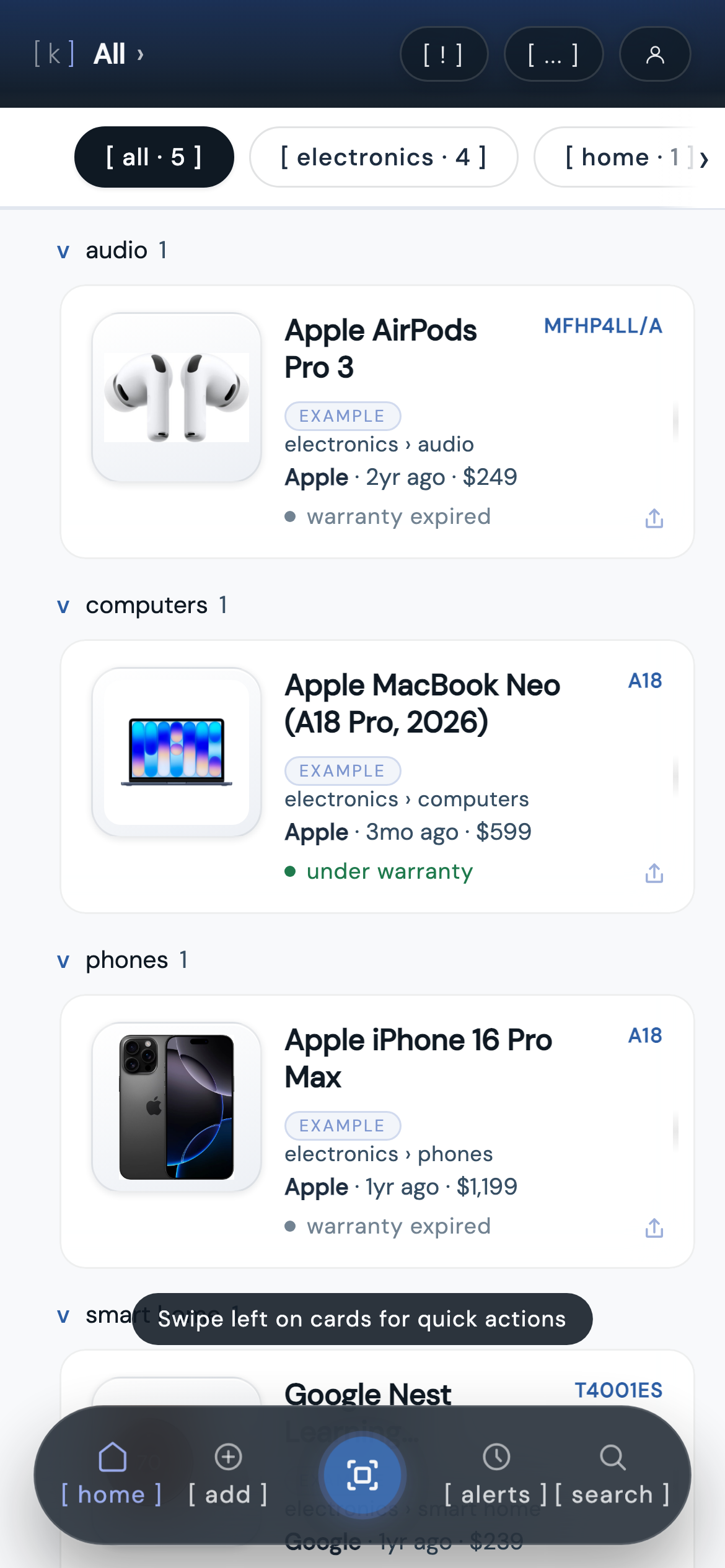
the moving list, still useful six months after the boxes are gone.
kept is built to outlast the move itself. What starts as a box-tracking list during packing becomes your actual home inventory once you're unpacked, the same record you'd hand an insurance adjuster or pull up when a warranty question comes up years later. If you're settling into a new place, pair this with our new house info checklist for what to track once the boxes are gone.
Frequently asked questions
What should be included in a moving inventory list?
A complete moving inventory list includes a number for every box, the room it came from, a short description of what's inside, and a condition note for anything already damaged or worn. High-value items need more: make, model, serial number, and a photo taken before the move. Skip the box-by-box detail for things like books or linens. Spend that time on electronics, jewelry, and anything you'd actually file a claim over.
Should I use a spreadsheet or a moving app to track my boxes?
A spreadsheet works until moving day, when you're standing in a driveway with wet hands and no laptop open. A phone-based app holds up better because you're already holding your phone while you pack and unpack. The real test isn't spreadsheet versus app, it's whether the list survives past the move. A spreadsheet on your desktop gets forgotten. An app like kept that also tracks warranties and serial numbers keeps giving you a reason to open it.
How do you label boxes so you know exactly what is inside?
Write the room and a box number on at least two sides of the box, not just the top, since boxes get stacked. Add a one-line contents summary, not just "kitchen" or "misc." A box marked "kitchen 4: mugs, mixing bowls, cutting boards" saves you from opening five boxes to find one item. Photograph the inside of each box before sealing it and match the photo to the box number in your list.
Can a moving inventory list help with insurance claims?
Yes, and it's often the difference between a paid claim and a denied one. Moving insurance and homeowners or renters policies both require proof an item existed, what it was worth, and its condition before the move. A list with photos, serial numbers, and estimated values gives the adjuster exactly what they ask for. Without it, you're relying on memory to describe something that's already gone.
Do I need to record serial numbers on my moving checklist?
For anything electronic or expensive, yes. Serial numbers are how insurance companies and police reports confirm an item is the specific one you owned, not just "a TV" or "a laptop." They also matter for warranty claims if something gets damaged in transit and the manufacturer needs to verify the unit. Photograph the serial number sticker directly. It's faster than typing it and you won't transpose a digit.