
Home Appliance Lifespan: When to Replace Every Major Appliance
Most homeowners have no idea how old their appliances are. Here's the lifespan of every major appliance, the warning signs each one gives before it fails, and how to decide whether to repair or replace.

table of contents
Why appliance age matters
Appliances don't send a notice before they fail. The dishwasher floods the kitchen on a Wednesday. The furnace dies in January. The fridge quits on a Friday afternoon when you've just done a big grocery run.
Most appliances show warning signs in the year or two before they go. If you know the age, you know when to start watching for them.
Repairing an appliance near the end of its life usually costs you twice. Once for the repair, once when you replace it eight months later anyway. Knowing the age lets you make that call before the service tech is standing in your kitchen.
If you bought a house with appliances already in it, you might not know how old any of them are. Start by pulling the model numbers and looking up the manufacture date. The appliance model number guide shows exactly where to find it on each type. While you have those numbers, check whether any units are under an active safety recall. Our roundup of hidden product recalls covers five common ones still in millions of homes.
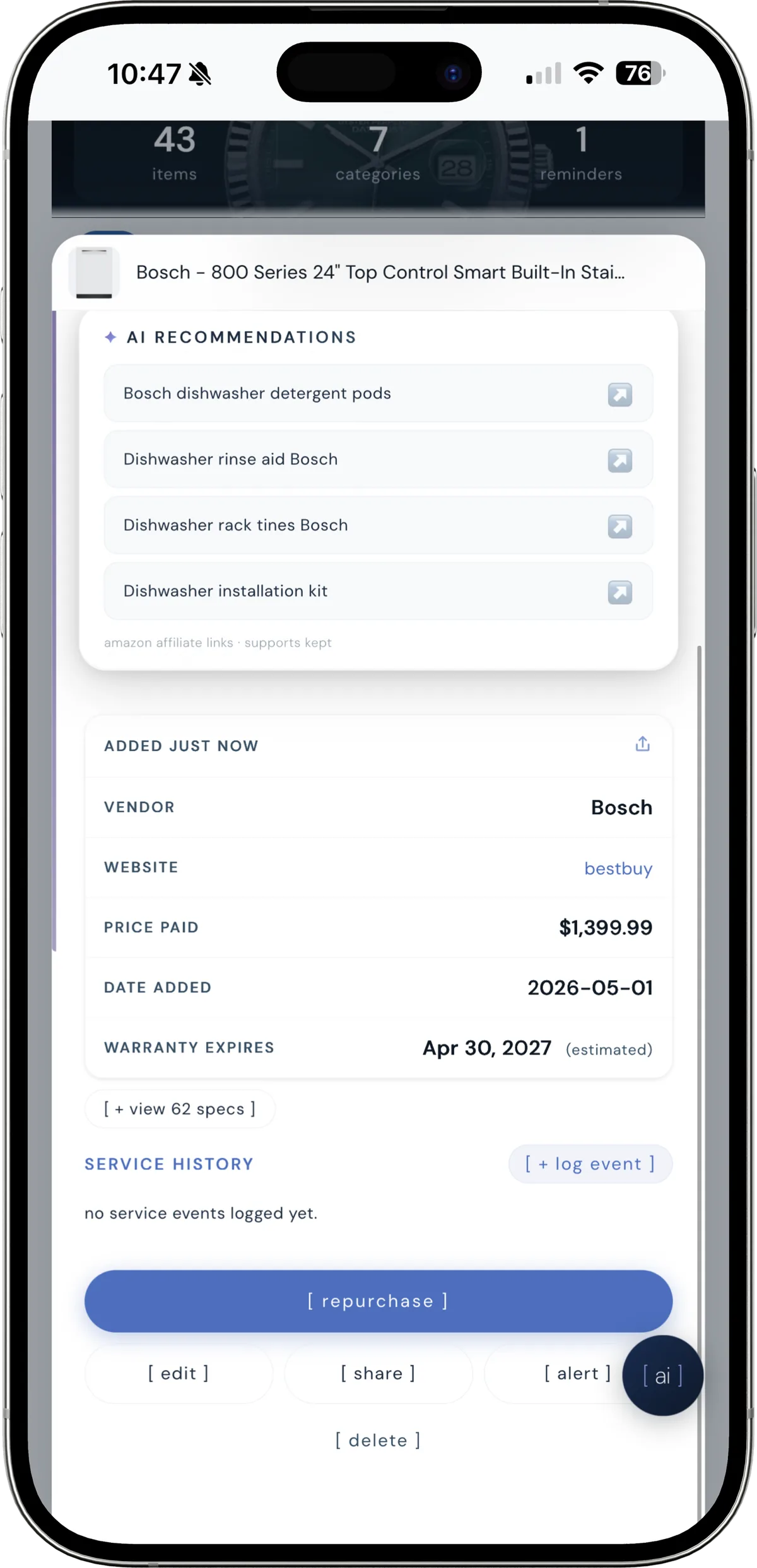
purchase date and warranty window, saved once, so age is a lookup instead of a guess.
The lifespan reference table
The first column is the typical range you'll see quoted by manufacturers and repair pros. The second is InterNACHI's estimated life expectancy chart, the one home inspectors use, and it runs noticeably more conservative, especially for central AC and tankless water heaters. Plan your replacement budget around the lower number and treat anything past it as a bonus. Well-maintained appliances often run longer. Heavily used or neglected ones fail earlier.
| Appliance | Average lifespan | Home inspector chart | Start watching at |
|---|---|---|---|
| Refrigerator (top/bottom freezer) | 14–17 years | 9–13 years | 12 years |
| Refrigerator (side-by-side) | 13–15 years | 9–13 years | 11 years |
| Dishwasher | 9–12 years | 9 years | 9 years |
| Washing machine | 10–14 years | 5–15 years | 10 years |
| Dryer (gas or electric) | 10–13 years | 13 years | 10 years |
| Gas range / oven | 15–17 years | 15–17 years | 14 years |
| Electric range / oven | 13–15 years | 13–15 years | 12 years |
| Microwave (countertop) | 9–10 years | 9 years | 8 years |
| Garbage disposal | 10–12 years | 12 years | 10 years |
| Furnace (gas) | 15–20 years | 15–25 years | 15 years |
| Central air conditioner | 15–20 years | 7–15 years | 15 years |
| Water heater (tank) | 8–12 years | 6–12 years | 8 years |
| Water heater (tankless) | 18–25 years | 10 years | 18 years |
Refrigerator
A top-freezer or bottom-freezer fridge typically runs 14–17 years. Side-by-side models run 13–15 years. The ice and water dispenser systems add complexity and usually go first.
Warning signs
- Runs constantly or cycles on and off more than usual
- Back of the unit is hot to the touch when it shouldn't be
- Food in the fridge section spoils faster than it should
- Visible frost buildup in the freezer even with auto-defrost
- Water pooling under the unit or inside the crisper drawers
The compressor is the part that usually fails first on an older fridge. A compressor replacement runs $400–$600 in labor alone. On a fridge that's 13+ years old, that repair rarely makes sense. Compare the repair quote against a new unit before agreeing to the work.
kept is reader-supported. When you buy through links on this page we may earn a small commission, at no extra cost to you. It never changes what we recommend.
Dishwasher
Dishwashers last 9–12 years. The pump and motor assembly are the most common failure points. The heating element goes too. That's why dishes stop drying. Not sure how old yours is? On a Bosch, the FD code on the door label gives the month and year it was built.
Warning signs
- Dishes aren't clean even after running a full cycle with fresh detergent
- Dishes come out wet consistently, or don't dry at all
- Door latch is loose or doesn't seal properly
- Rust spots inside the tub
- Water pooling at the bottom after a completed cycle
- Unusual grinding or humming during the wash cycle
Washer and dryer
Both typically last 10–14 years. Front-load washers have more parts than top-load models (door seals, bearing assemblies, control boards) and each one is a potential repair. Dryers are simpler and often outlast the washer they were paired with.
Washer warning signs
- Loud banging or shaking during the spin cycle, even with a balanced load
- Water leaking from the door seal or underneath the unit
- Clothes come out still soapy or with residue
- Drum won't spin or agitator isn't engaging
Dryer warning signs
- Takes two or three cycles to fully dry a normal load
- Clothes are very hot but still damp (often a restricted exhaust vent, but could be a failing heating element)
- Drum doesn't turn but the motor runs
- Burning smell during a cycle
Quick check: before calling for washer repair, make sure the exhaust vent isn't clogged. A blocked dryer vent is the most common reason clothes don't dry and the most underestimated fire risk in a home. Check it annually as part of your home maintenance schedule.
HVAC and furnace
A gas furnace typically lasts 15–20 years. Central AC is often quoted at 15–20 years too, but InterNACHI's chart puts it at 7–15, and coastal salt air or a hot climate pushes it toward the low end. A $1,200 repair on a 17-year-old furnace is a replacement decision. The same repair on a 5-year-old unit is just maintenance.
Annual service extends HVAC life more than any other single thing you can do. A well-serviced furnace outlasts a neglected one by several years. Check your home maintenance log to see when yours was last serviced.
Furnace warning signs
- Yellow or flickering burner flame instead of steady blue
- Rising heating bills without a change in usage or weather
- Some rooms heat unevenly while others stay cold
- More repairs in the past two years than in the previous five
- Banging, rattling, or popping sounds during startup
AC warning signs
- Refrigerant leak (system needs to be "recharged" more than once)
- Compressor failure or frequent short-cycling
- Ice forming on the indoor coil
- The system runs constantly but can't maintain the set temperature on a mild day
Water heater
Tank water heaters last 8–12 years. Tankless units are often quoted at 18–25 years, but the InterNACHI inspector chart plans on 10, and hard water without annual descaling is usually why. The tank style is more common and fails with the least warning. A pinhole leak in the tank can flood a utility room before you notice it.
The full water heater maintenance guide covers anode rod replacement, sediment flushing, and the exact signs your unit is on its way out.
Tank water heater warning signs
- Rusty or discolored hot water
- Rumbling or popping sounds when heating (sediment buildup)
- Water around the base of the tank
- Hot water runs out faster than it used to
- Unit is over 10 years old and hasn't had maintenance
What to do at 8 years
At 8 years, have a plumber inspect the anode rod and check the pressure relief valve. If the rod is heavily corroded and the unit hasn't been maintained, you're likely in the last few years of its life. Start budgeting for a replacement now rather than waiting for a failure.
The others: disposal, range, microwave
Garbage disposal (10–12 years)
Disposals are simple machines. They either jam, leak from the bottom seal, or the motor burns out. A leaking seal or a jammed disposal is usually a repair. A motor failure on a unit over 10 years old is a replacement. New disposals cost $100–$300, and a plumber can swap one in an hour.
Gas range and oven (15–17 years)
Ranges last a long time. The most common failures are igniter burnout (burner clicks but won't light), bake element failure in an oven, and control board issues on digital models. All of these are repairable on a newer range. On a 15-year-old range that's showing multiple issues, replacement starts to make sense.
Countertop microwave (9–10 years)
Microwaves are the one appliance where repair rarely makes financial sense at any age. The magnetron (the part that actually heats food) costs nearly as much as a new mid-range unit to replace. If your microwave is over 7 years old and the heating is inconsistent, replace it.
kept stores install dates and model numbers so you can see which appliances are nearing the end of their lifespan.
[ try kept free ]Repair vs. replace: the 50% rule
The 50% rule: if a repair costs more than 50% of what a new unit costs, replace it. The rule lands hardest when the appliance is already past the halfway point of its expected lifespan. A $400 repair on a 2-year-old dishwasher makes sense. The same repair on a 10-year-old one usually doesn't, especially when a new unit costs $600–$800 and comes with a fresh warranty.
There's a second version: multiply the repair cost by the appliance's age in years. If that number exceeds the replacement cost, replace. A $200 repair on a 5-year-old appliance gives you $1,000. Against a $900 replacement cost, you replace. The numbers won't always split this cleanly, but the math points you in the right direction.
Energy efficiency is worth factoring in too. A new Energy Star refrigerator costs $30–$50 less per year to run than a 12-year-old model. Over 15 years, that's $450–$750 back, which shifts the calculation on a borderline repair decision.
For HVAC, get a written replacement quote before authorizing a major repair. A good contractor will give you both numbers. If you don't have a go-to HVAC tech, the guide on building a contractor contact list is a useful starting point.
How to track what you own
Most homeowners don't know how old their appliances are. They bought the house with them already installed, or they bought things years ago and never wrote anything down. Start by finding the model number on each one and looking up the manufacture date from the serial number. A home maintenance record gives you one place to keep all of it.
In kept, you add each appliance once: scan the barcode or type the model number, add the purchase or manufacture date, set a maintenance reminder. kept tracks the age and nudges you when the appliance is approaching the end of its expected lifespan.
You won't catch every failure. You'll catch most of them with enough lead time to shop on your schedule, not under pressure on a Saturday morning with no hot water.
Frequently asked questions
How long does a refrigerator last?
Most refrigerators last 13–17 years. Side-by-side models tend to fail earlier (around 14 years) while top-freezer models often run longer. Once a fridge needs a compressor replacement or a second major repair in two years, replacement usually makes more financial sense than continuing to repair it.
When should I replace my dishwasher?
Dishwashers typically last 9–12 years. Signs it's time to replace: dishes aren't coming out clean even after descaling, the door latch or control board has failed, or rust appears inside the tub. A repair that costs more than half the price of a new unit is rarely worth it at this age.
How do I know if my HVAC needs replacing?
A gas furnace typically lasts 15–20 years; central AC runs 15–20 years as well. Warning signs include rising energy bills without a change in usage, frequent repairs in back-to-back seasons, inconsistent temperatures room to room, and any refrigerant leak on the AC side. If the system is over 15 years old and needs a major repair, get a replacement quote before authorizing the fix.
What is the 50% rule for appliance repair?
The 50% rule: if the cost of a repair is more than 50% of the current replacement cost of the appliance, replace it instead. The rule applies most clearly to appliances that are already more than halfway through their expected lifespan. A $400 repair on a 3-year-old fridge makes sense. The same repair on a 14-year-old fridge usually doesn't.
How do I find out how old my appliances are?
The best way is to find the model and serial number on the appliance's data plate, then look up the manufacture date using the brand's serial number decoder. Most major brands encode the year and week of manufacture in the serial number. You can also contact the manufacturer's support line with the serial number. Once you know the age, save it in kept so you always have it.
How can I extend the lifespan of my washing machine?
Washers typically last 10–14 years. Don't overload the drum, leave the door open between loads so the seal can dry out, and run a cleaning cycle monthly to prevent residue buildup. Front-load machines have more failure points (door seals, bearings, control boards) than top-load, so they benefit most from this upkeep.
How long does a hot water heater typically last?
Tank water heaters last 8–12 years. Tankless units are often quoted at 18–25 years, though home inspectors plan on closer to 10 without regular descaling. Tank units fail with the least warning. A pinhole leak can flood a utility room before you notice. At 8 years, have a plumber check the anode rod and pressure relief valve; if the rod is heavily corroded, start budgeting for a replacement.