Contractor Contact List: How to Build One and Never Lose a Good Contractor Again
I lost a great electrician because I never wrote his number down. Two years later I needed him and spent an hour looking. Now I keep a list. Here's how to build one.

kept is reader-supported. When you buy through links on this page we may earn a small commission, at no extra cost to you. It never changes what we recommend.
The problem with contractor contacts
A few years ago I found a great electrician. Showed up on time, explained everything he was doing, charged a fair rate. I paid him and went on with my life.
Two years later I needed the same kind of work done. I asked my spouse: "Do you remember that electrician's name?" No. I searched my texts for about 20 minutes. I checked old emails. I asked a neighbor. I ended up on a neighborhood app, picked someone new, paid more, and waited three weeks.
I'd already vetted and trusted this guy. I lost him because I never wrote anything down.
That's the thing about contractor contacts: you don't realize you need the system until you're standing there needing the contractor. Two minutes of logging when you hire someone saves hours of searching later.
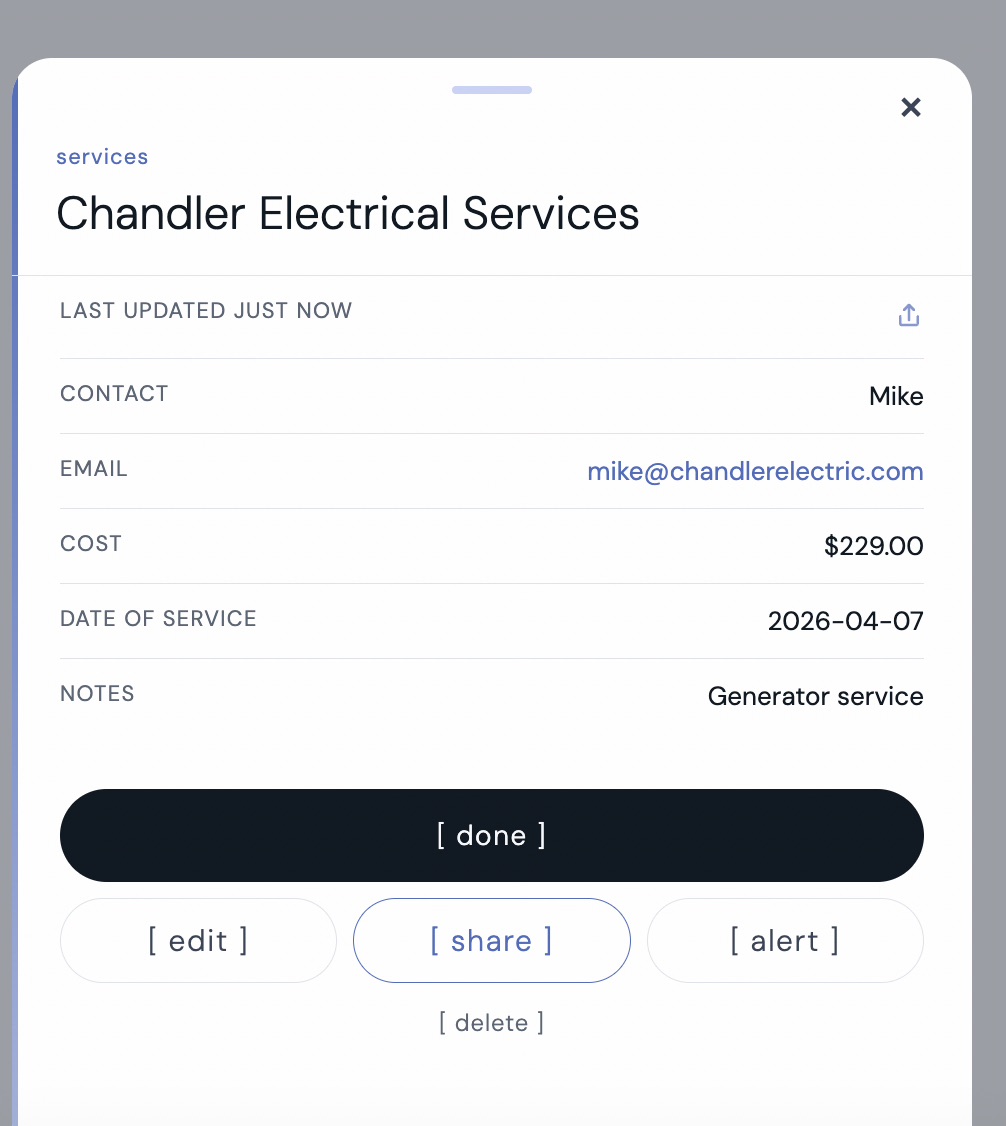
this is the two minutes: contact, cost, and what they actually did, saved the day you paid.
What to include in your contractor contact list
Don't just save a name and number. You want to remember them specifically:
- Name: Full name and company name
- Phone: Their primary number
- Email: If they have one
- Trade: What they do (plumber, electrician, painter, etc.)
- Date last used: When you hired them
- Job description: What did they do for you?
- Cost/pricing: What they charged (helpful for estimating future work)
- Your notes: "Great communication, finished early," or "slow but meticulous," or "overpriced but reliable"
- Would hire again?: Yes/No (sometimes you find someone who does okay work but you don't want to use again)
- License number: Copy it off the contract or estimate. You can re-check it with your state board years later
- Workmanship warranty: How long they stand behind the job (a roofer's 10-year labor warranty is worthless if you can't find who gave it)
Contractor contact list template
| Name | Trade | Phone | License # | Used When | Notes | |
|---|---|---|---|---|---|---|
| Dale, AquaClear | Septic pumping | 555-0147 | dale@aquaclear.com | n/a | Sept 2026 | Professional, fair price, early riser |
| Mike Rodriguez | Plumber | 555-0892 | none | MP-04417 | Jan 2026 | Fixed burst pipe. Reliable. On-time. |
| ColorPro NH | Painting | 555-0334 | info@colorpronh.com | n/a | July 2025 | Painted Emma's room. Perfect trim work. Worth the cost. |
| Jim's Electric | Electrician | 555-0556 | none | EL-22981 | Oct 2025 | Added outlet. Quick. Friendly. |
kept stores contractor contacts alongside the items they service so you call the right person every time.
[ try kept free ]How to build and maintain your contractor list
- After each contractor visit: Immediately add them to your list. Phone number, service they provided, date, your notes. Do it that day or you'll forget. Add the service date to your home maintenance log at the same time.
- Photograph their business card: If they have one, take a photo and store it with their contact info
- Store it digitally: Don't keep it in a physical notebook or file folder. It will get lost. Use an app, a spreadsheet, or a note system you check regularly
- Share it with your household: If you live with someone else, they should have access. When you're traveling and the furnace breaks, they need the HVAC person's number
- Update ratings and notes: After they finish, note your experience. A year later when you're deciding whether to hire them again, you'll remember exactly why you used them
In kept, that same entry holds the name, contact, what they charged, when they came, and your notes. You can search it from your phone and share it with anyone in your household. The screenshot near the top of this page is a real one: an electrician, $229, generator service, April 2026.
Types of contractors to track
You won't need all of these. Most houses end up with five or six regulars:
- Plumber: Leaks, drains, fixtures, inspections
- Electrician: Outlets, wiring, panels, inspections
- HVAC: Heating, cooling, maintenance, repairs. Ask them to note your furnace filter size while they're there
- Roofer: Inspections, repairs, replacements
- Painter: Interior, exterior, trim work
- General contractor: Renovations, repairs, coordination
- Septic / Sewer: Pumping, repairs, inspections
- Appliance repair: Washer, dryer, refrigerator, dishwasher
- Carpet / flooring: Installation, repairs, cleaning
- Landscaping / lawn care: Mowing, pruning, maintenance
- Home inspector: Inspections (for resale or issues)
- Pest control: Termite, mosquito, general pests
Check them before they go on the list
A list is only as good as the people on it. Before a new contractor earns a spot, run the checks the FTC recommends for home improvement jobs:
- License: Confirm it with your state or county licensing office. Save the number in your list so you can re-check it next time.
- Insurance: Ask for proof of insurance, and note when the certificate expires.
- Written estimate: It should describe the work, materials, completion date, and price. The lowest bid isn't automatically the best one.
- Payment terms: Be wary of anyone who wants the whole job paid up front or only takes cash. If you sign a contract at your home, the FTC's Cooling-Off Rule usually gives you three business days to cancel.
One more check matters in 2026: don't trust a listing just because it looks local. In May 2026 the FTC and the state of Illinois sued a Chicago company that created thousands of online profiles for home-repair businesses that didn't exist. The listings showed fake addresses and fabricated five-star reviews. Callers reached a call center, and often no technician ever showed up.
That's the best argument for a personal list. A contractor who already did good work at your house, with a license number you checked, beats any search result.
Red flags: contractors not to rehire
Your notes should also flag contractors you don't want to use again:
- No-shows or chronic lateness without notice
- Poor communication (doesn't respond to calls/texts)
- Quality issues or sloppy work
- Aggressive upselling or hidden fees
- Unprofessional behavior
- Left your property messy or damaged
If you had a bad experience, note it. This saves you from hiring the same mediocre contractor again because you forgot why you stopped using them. Your contractor list is just one part of a complete home maintenance record system. Appliance specs, service history, and contacts all belong together.
FAQ
Should I store passwords or payment info with contractor info?
No. Never store passwords or sensitive payment information in your contractor list. Just name, phone, email, trade, and notes about your experience.
What if a contractor goes out of business?
Keep their information in your list anyway. You might remember someone recommended by them. Plus you'll know not to hire them again and to mark "out of business" in your notes.
How often should I update my contractor list?
Add new contractors immediately after using them. Update notes and phone numbers as needed. Every 6 months, review the list and mark anyone you definitely wouldn't hire again.
Can I share my contractor list with neighbors?
Yes. Sharing good contractors is how neighborhoods improve. Just make sure the contractor is okay with being referred. Most are happy about it.
What should I check before hiring a contractor?
Confirm their license with your state or county, ask for proof of insurance, and get a written estimate that lists the work, materials, completion date, and price. Avoid anyone who wants full payment up front or cash only.