Appliance Recalls: How to Check If Yours Is Recalled
A recalled appliance only protects you if you hear about it. Here's how to check every appliance you own against the official database, what to do when one comes back flagged, and how to stop relying on luck to find out.

table of contents
Why appliance recalls slip past people
When an appliance gets recalled, nobody knocks on your door. The manufacturer posts a notice, the Consumer Product Safety Commission publishes it, a few news outlets cover the big ones, and that is the whole alert system. Unless you registered the product when you bought it, the company has no way to reach you. Most people never registered.
So the recall sits in a database while the appliance sits in your kitchen or basement, still plugged in, still running. The hazard is usually not theoretical. The CPSC recalls appliances because they overheat, catch fire, shock people, or burn them. A dehumidifier that has been recalled for fire risk does not look any different the day after the recall than it did the day before.
The gap is simple. The recall data is public and free to search. The reason people get caught off guard is that they have no list of what they own to check against. You cannot search a database for "my appliances" if you have never written down what your appliances are. Our guide to hidden product recalls most homeowners miss covers how many recalled products stay in homes for years for exactly this reason.
How to check if your appliance is recalled
Checking one appliance takes about two minutes once you have its details. The catch is the details. A recall is matched by brand, model number, and often a serial number or date code, so you need those three things before the search means anything.
Step 1: find the model and serial number
Every appliance carries a data plate with its model and serial number. The plate is metal or a printed sticker, and it hides in the same handful of places on most units:
- Refrigerator: inside on the side wall, or behind the crisper drawer
- Dishwasher: the inside edge of the door, visible when it is open
- Washing machine and dryer: the back panel, or inside the door frame
- Range or oven: behind the storage drawer, or inside the door frame
- Dehumidifier and window AC: a sticker on the back or the side of the housing
- Water heater: a label on the tank near the top
If you cannot read a worn plate, our full guide on where to find any appliance's model number walks through every appliance type and where the number hides. Photograph the plate or scan the barcode while you are standing there, because you will not want to crawl behind the dryer twice.
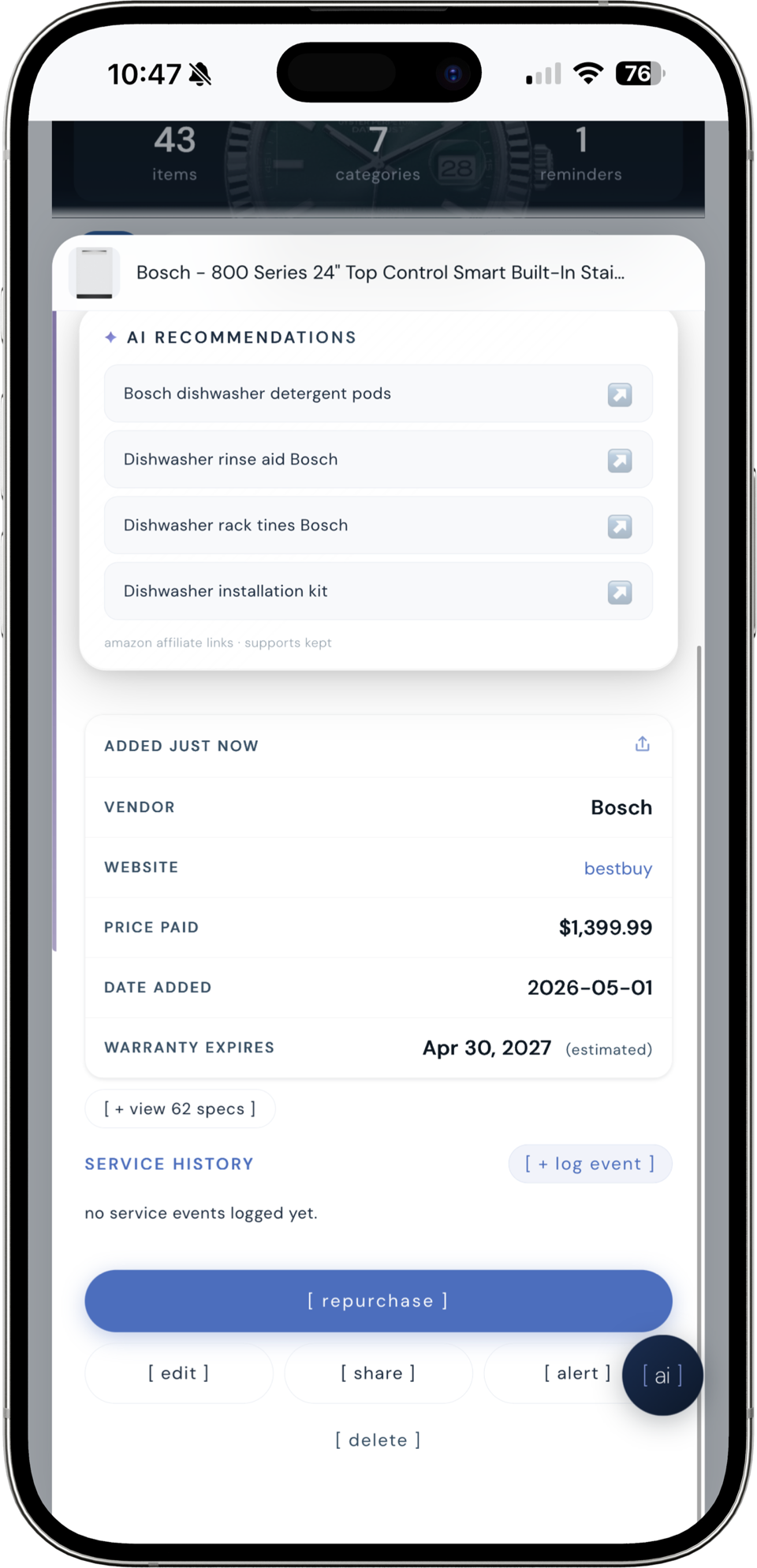
one appliance in kept: model, vendor, price, and warranty saved together, so a recall check is a glance, not a scavenger hunt.
kept is reader-supported. When you buy through links on this page we may earn a small commission, at no extra cost to you. It never changes what we recommend.
Step 2: search the official database
Take the brand and model number to the CPSC recall database at cpsc.gov/Recalls and search. The agency lists the hazard, the affected model and serial ranges, and the remedy for every active recall. Our walkthrough on how to search the official CPSC recall database shows exactly what to type and how to read the results, and the companion guide on how to check if a product you own has been recalled covers the manufacturer side. Match the serial or date code carefully. A recall usually applies to a specific production run, so the same model built in a different month may not be affected.
kept holds every appliance you own, model and serial included, and checks each one against new CPSC recalls for you.
[ try kept free ]What to do if your appliance is recalled
A recall notice always lists two things: the hazard and the remedy. Read both before you do anything else.
- Stop using it if the hazard is fire or shock. Unplug it. A recall for an overheating dehumidifier or a range that turns itself on is not a "deal with it next weekend" problem.
- Do not throw it out yet. Some remedies require you to return the unit or a specific part to get your refund or replacement. Trashing it first can cost you the claim.
- Contact the manufacturer. Use the phone number or web form in the recall notice. Have your model and serial number ready, since that is the first thing they ask for.
- Follow the remedy. It will be a free repair, a free replacement, or a refund. Recalled dehumidifiers and other units that cannot be safely fixed are often refunded outright.
- Keep a record of the claim. Note the date, the reference number, and what they promised. If a replacement is on backorder, you will want the paper trail.
If the recalled appliance was still under warranty, the recall claim and the warranty are separate tracks worth keeping straight. Our free warranty check tool tells you whether the warranty is still live, and our guide to checking any appliance warranty covers how to keep both in one place so a single broken appliance does not turn into three browser tabs and a lost receipt.
Keep the proof: Refunds and replacements move faster when you can show the model, serial, and proof of purchase on the spot. A photo of the data plate and the receipt, saved together, is the whole claim packet most manufacturers ask for.
The appliances recalled most often
Recalls cluster around heat and electricity in daily use. If you own any of these, they are worth checking first.
- Dehumidifiers. One of the most recalled home appliances, almost always for overheating and catching fire. If you run one in a basement, check it.
- Ranges and ovens. Recalled for burn hazards, knobs that turn the burner on by accident, and glass that shatters.
- Dishwashers. A repeat offender for fire risk tied to the heating element and wiring.
- Microwaves. Recalled for overheating, doors that fail, and units that run with the door open.
- Refrigerators and freezers. Less frequent, but recalls happen for electrical faults and ice maker problems.
- Plug-in appliances. Space heaters, pressure cookers, power banks, and air fryers show up on recall lists constantly for fire and burn hazards.
None of this means your specific unit is dangerous. It means these categories earn recalls often enough that "I would have heard about it" is a bad bet. The point of an inventory is that you do not have to guess which of your appliances made a list this month. For a sense of which appliances are also nearing the end of their safe service life, see our guide to home appliance lifespan.
How to never miss the next one
Checking your appliances once is good. The problem is that recalls keep coming. The dishwasher that is fine today gets recalled next spring, and you are back to relying on a news story you might not see. There are two ways to stay ahead, and they work best together.
First, get the official feed. The CPSC sends free recall emails, and our guide to CPSC recall alerts walks through setting them up. The catch is that the feed covers everything, so you are scanning a firehose for the handful of products you actually own.
Second, match the feed against your own list. This is what kept does. You add an appliance once by scanning its barcode or typing the model, and from then on kept checks new CPSC recalls against it automatically. It flags matches at two levels of confidence, because a recall alert you cannot trust is worse than no alert at all.
When kept can match your exact model to the recall, it flags the appliance in red. This one is recalled, here is the hazard, here is the remedy you are owed. Subscribers get a push notification the same day.
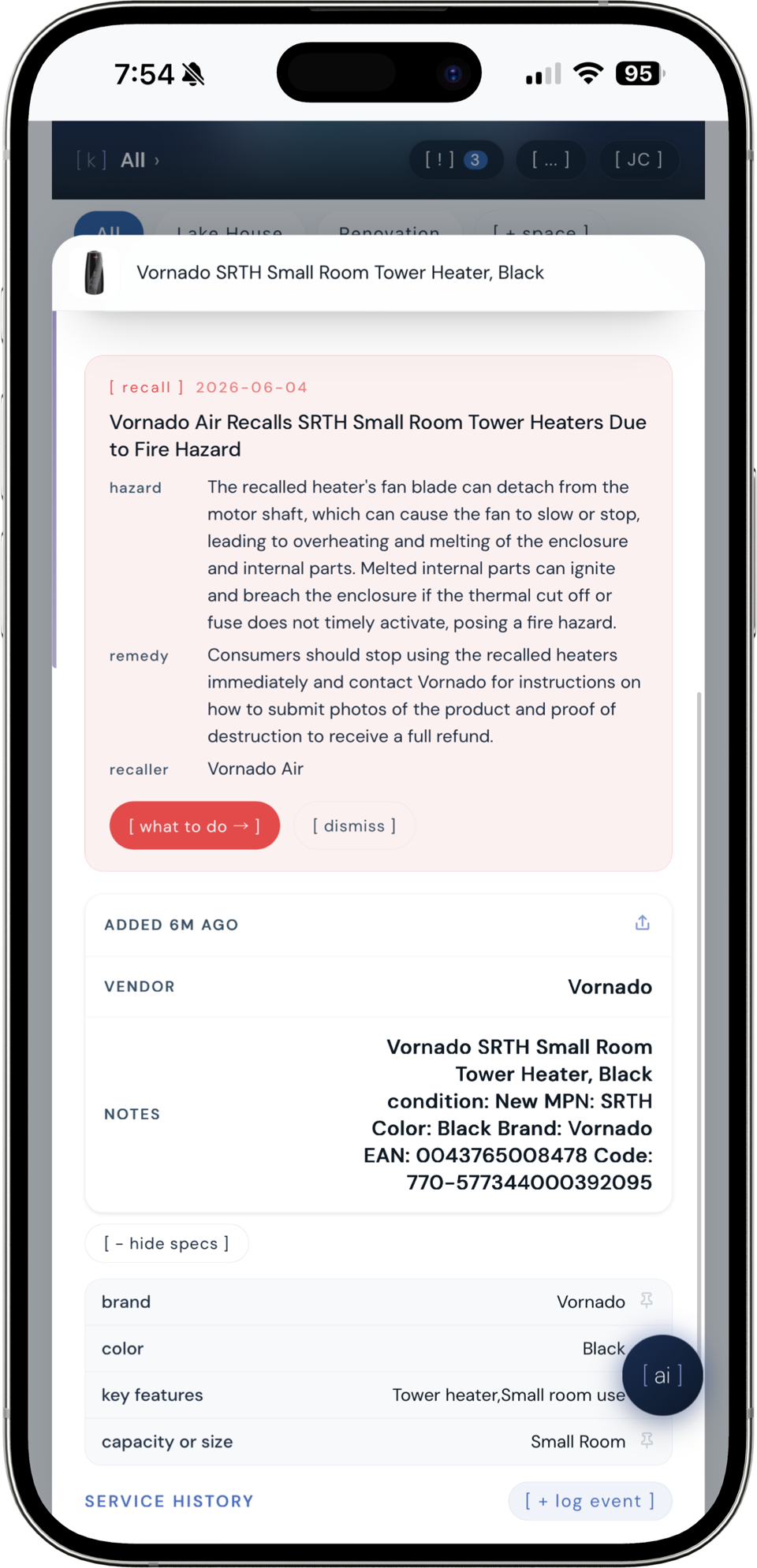
a confirmed match: kept found this exact model on the recall list and flagged it red, hazard and remedy included.
When the recall only names the brand and a product type, kept will not pretend to be certain. It shows an amber heads up instead: a recall may affect something like this, here is the official notice, go check your model and serial number. You stay informed without the false alarm.
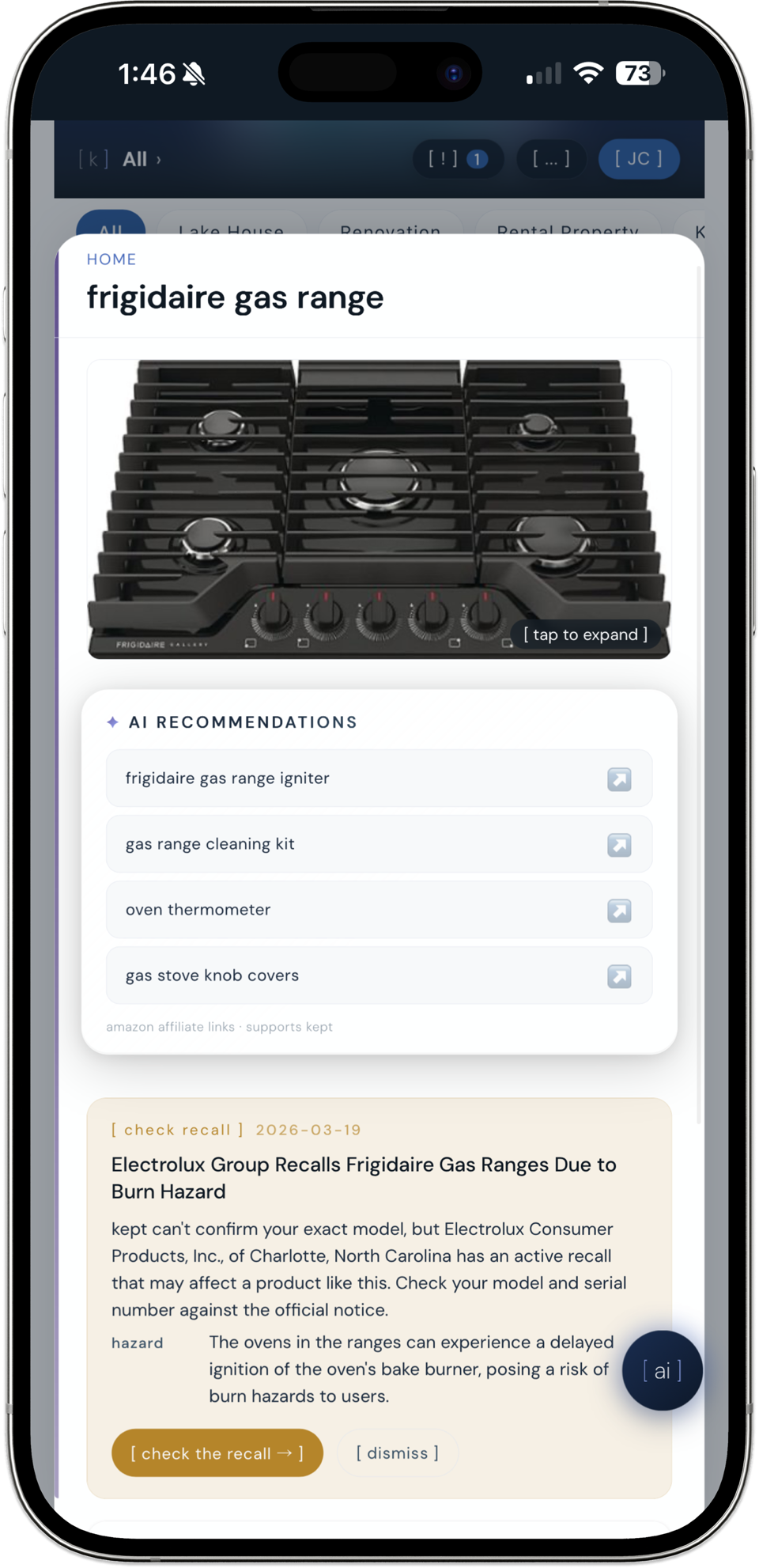
a heads up: the brand has an active recall, but kept cannot confirm this exact unit, so it tells you to check rather than cry wolf.
The two together close the gap. The official email means nothing slips past the agency, and the matched list means nothing slips past you. The same saved records double as a home inventory for everything else you own, which is useful long after the recall scare is over.
Frequently asked questions
How do I know if my appliance has been recalled?
Find the appliance's brand, model number, and serial number on its data plate, then search those against the official CPSC database at cpsc.gov/Recalls. You can also check the manufacturer's website, since brands list active recalls and remedies there. If you keep a list of your appliances with model numbers saved, the check takes seconds. kept does it automatically by matching new CPSC recalls against the items you own.
What should I do if my appliance is recalled?
Stop using it if the recall says the hazard is fire, shock, or anything that can cause injury, then follow the remedy listed in the recall notice. The remedy is usually a free repair, a free replacement, or a refund. Contact the manufacturer using the phone number or web form in the notice, give them your model and serial number, and keep a record of the claim. Do not throw the appliance out before you read the remedy, since some require you to return a part or the whole unit.
Are recalled appliances still dangerous to use?
Often yes. The CPSC issues most appliance recalls because the product can catch fire, overheat, shock the user, or fail in a way that causes injury. A recall does not mean every unit will fail, but it means enough have failed that the agency considers the risk serious. If the hazard listed is fire or shock, unplug the appliance and stop using it until the manufacturer's repair or replacement is in hand.
Which appliances are recalled most often?
Dehumidifiers are among the most recalled home appliances, almost always for overheating and fire risk. Ranges, ovens, dishwashers, microwaves, washing machines, and refrigerators also appear on recall lists regularly, usually for fire, shock, or burn hazards. Smaller plug-in appliances like space heaters, power banks, and pressure cookers are recalled frequently too. The common thread is heat and electricity in everyday use.
Do I get money back for a recalled appliance?
Sometimes. The remedy depends on the recall. Manufacturers offer a free repair, a free replacement, or a refund, and the recall notice spells out which one applies. Refunds are common for appliances that cannot be safely repaired, like many recalled dehumidifiers. You usually need proof of the model and serial number, and sometimes proof of purchase, so having those saved makes the claim faster.