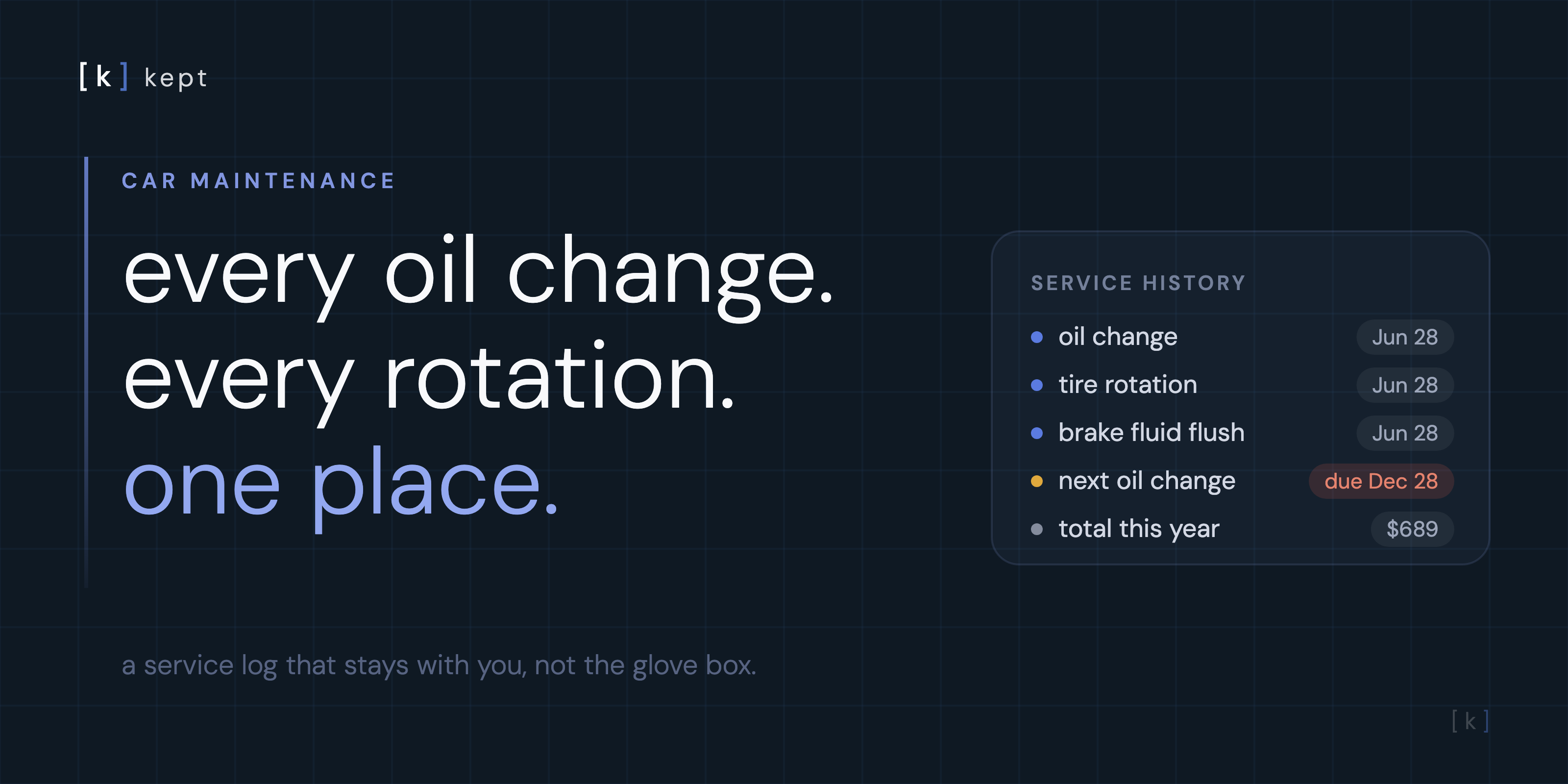
Car Maintenance Log: Track Every Oil Change and Repair
"When was my last oil change?" is a question you answer three times a year, usually while a service advisor waits. A maintenance log answers it in two seconds, protects your warranty, and adds real money at resale. Here's how to keep one you'll actually maintain.

table of contents
Why a maintenance log pays for itself
Three moments make the log worth keeping, and all three arrive without warning.
The warranty claim. Manufacturers can deny powertrain coverage when required maintenance can't be proven. Under the federal Magnuson-Moss Warranty Act, they can't deny a claim just because you did the oil changes yourself or used an independent shop, but you carry the burden of proof. A log with dates, mileage, and receipts is that proof. No log, no case.
The repair dispute. "Your last shop used the wrong oil" ends differently when you can show the invoice with the spec printed on it, ten seconds after being asked.
The sale. Every used-car buyer fears the same thing: neglect they can't see. A seller who scrolls through a complete service history removes that fear, and fear is what discounts are made of. Dealers know this, which is why certified pre-owned cars with documented history command a premium. Private sellers with a log get some of that same premium for free.
It's the same habit as a home maintenance log, pointed at the second most expensive thing you own.
What to include in a vehicle maintenance log
Every entry gets four fields. Don't skip any of them, and don't add more; complicated logs die young.
- Date of the service
- Odometer reading, the number every future interval counts from
- What was done: "oil change, tire rotation" beats "service"
- Cost and who did it: the shop name matters for disputes and warranty proof
The log itself should also hold the car's reference card, the specs you rehearse in the parts store aisle:
Your car's reference card
- ☐ VIN (photograph the door-jamb sticker once)
- ☐ Oil type and capacity (e.g. 0W-20 synthetic, 6.0 quarts)
- ☐ Tire size and target pressure (e.g. 275/40R21, 36 psi front)
- ☐ Battery group size
- ☐ Wiper blade sizes (driver and passenger differ on most cars)
- ☐ Cabin and engine air filter part numbers
- ☐ Insurance policy number and agent phone
- ☐ Current registration renewal month
Attach receipt photos to each entry. The receipt carries what memory drops: the oil spec, the brake pad brand, the 12-month parts warranty on the alternator that fails in month 11.
Paper vs. spreadsheet vs. app
The glovebox notebook fails two ways: it's never with you when the service advisor asks, and it leaves with the car at trade-in, taking your history with it. The spreadsheet fails more slowly. It works until the third time you're at the shop without a laptop, and then entries stop.
The phone wins because it's the one thing present at every service visit. The test for any system is the same one we apply to home maintenance records: can you find any fact in under ten seconds, one-handed, standing at a counter? If not, the system will quietly stop being used.
One caution on single-purpose car apps: they get abandoned when the novelty fades, and an abandoned log is worse than none, because it looks like the maintenance stopped. A tracker that already holds the rest of your stuff, your appliances, warranties, and paint colors, gets opened weekly for other reasons. The car log rides along on that habit.
Set up a car maintenance log in five minutes
In kept, the car is just another item you own, with a service log attached. Setup:
- Add the vehicle. Type the year, make, and model. kept fills in the spec sheet: engine, drivetrain, towing capacity, fuel economy.
- Add the reference card. VIN, mileage, tire size, oil spec, in the item's fields and notes.
- Backfill what you know. Even two or three past services with rough dates beat an empty log. Pull dates from bank statements if you have to.
- Log each service as it happens. Open the car, add a service entry with date, mileage, work done, and cost. Photograph the invoice. Thirty seconds, done in the parking lot before you drive off.
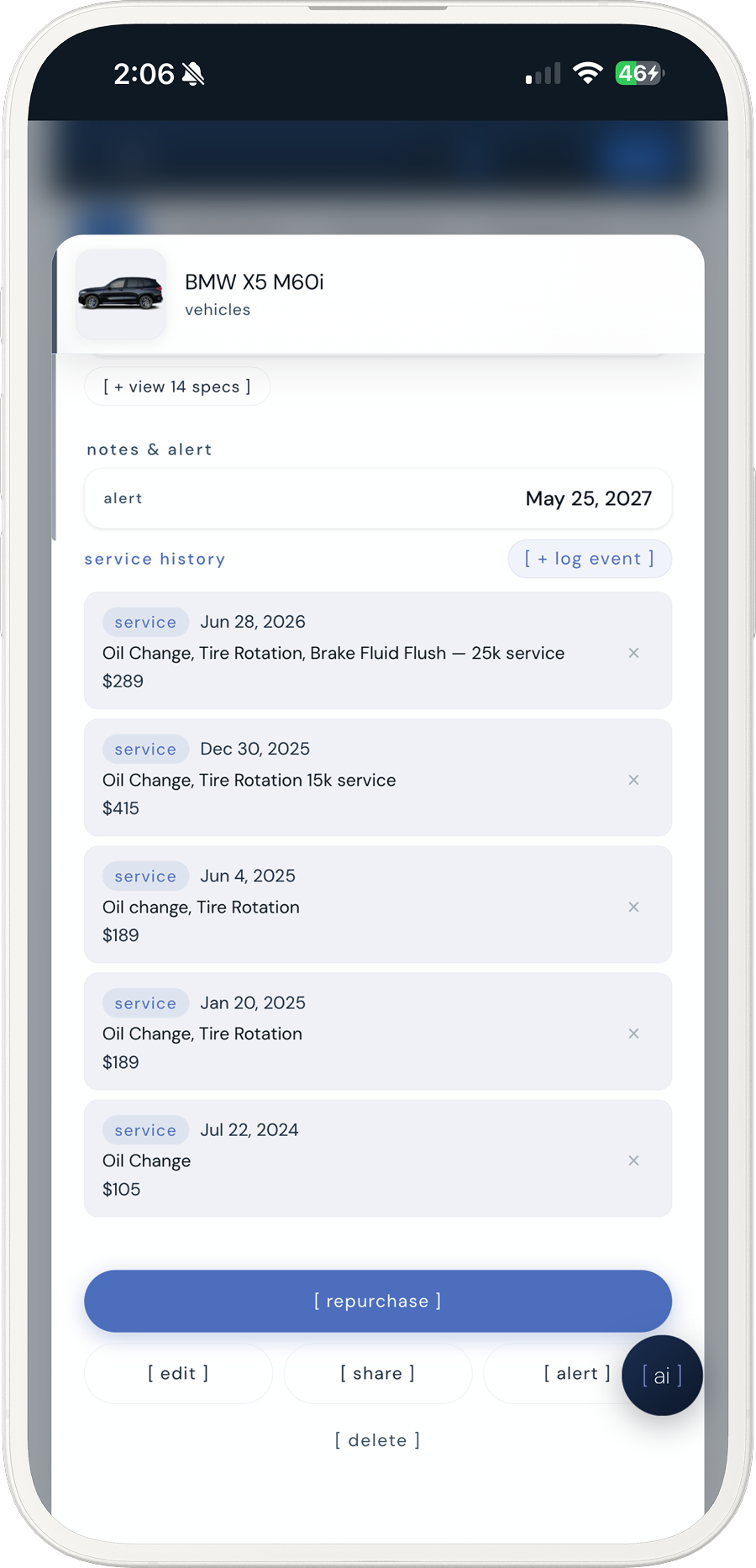
every oil change, rotation, and flush on one screen, with costs and dates.
Services that aren't tied to the car itself, like your detailer or the body shop, can be saved as service contacts, the same way you'd keep a contractor contact list for the house.
you've reconstructed your service history from bank statements before
Log it once at the shop instead. kept keeps every service, receipt, and reminder on the car itself, searchable in seconds.
[ try kept free ]How often to log mileage
At every service, no exceptions. The odometer reading is the anchor that makes every other interval computable. An oil change entry without mileage is half an entry.
Beyond that, match the habit to your situation:
- Leased car: monthly. A ten-second odometer photo on the first of the month tells you whether you're tracking toward the mileage cap while there's still time to adjust.
- Business miles for taxes: the IRS wants contemporaneous records, so log trips as they happen, not reconstructed in April. Dates matter more than usual this year: the 2026 standard mileage rate is 72.5 cents a mile for business driving from January through June and 76 cents from July 1 on, so each trip needs its date to get the right rate.
- Everyone else: service visits plus any long road trip. That's enough resolution to keep intervals honest.
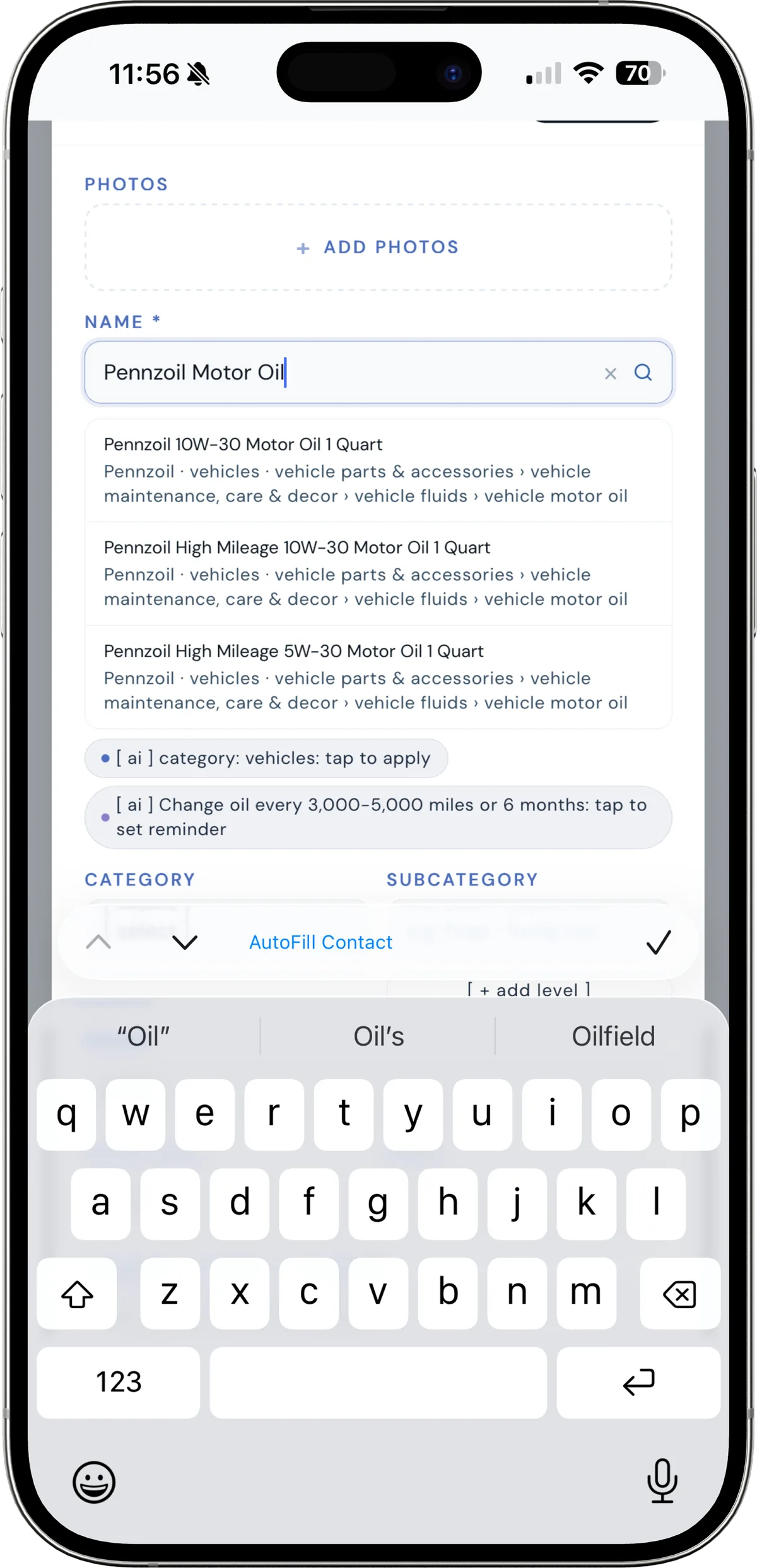
logging an oil change in kept: date, notes, cost, done.
The intervals worth tracking
Your owner's manual is the authority; these are the typical modern-car numbers to check yours against.
| Service | Typical interval | Worth logging because |
|---|---|---|
| Oil and filter (synthetic) | 7,500–10,000 mi or 12 months | The interval everyone misremembers by 3,000 miles |
| Tire rotation | 5,000–8,000 mi | Uneven wear voids tire mileage warranties |
| Engine air filter | 15,000–30,000 mi | Cheap part, commonly upsold early when there's no record |
| Cabin air filter | 15,000–30,000 mi | Same upsell pattern as the engine filter |
| Brake fluid | ~3 years | Time-based, so mileage memory doesn't help |
| Coolant | 50,000–100,000 mi, then per schedule | Skipping it is how water pumps and radiators die |
| Transmission fluid | 60,000–100,000 mi if serviceable | The claim adjuster's favorite question |
| Wiper blades | 6–12 months | Log the size once, buy replacements without the fitment guide dance |
Set a reminder for the next oil change when you log the current one, while the mileage is in front of you. In kept, reminders sit on the item and land in one calendar, next to your furnace filter and every other recurring home service, so car care stops depending on the windshield sticker.
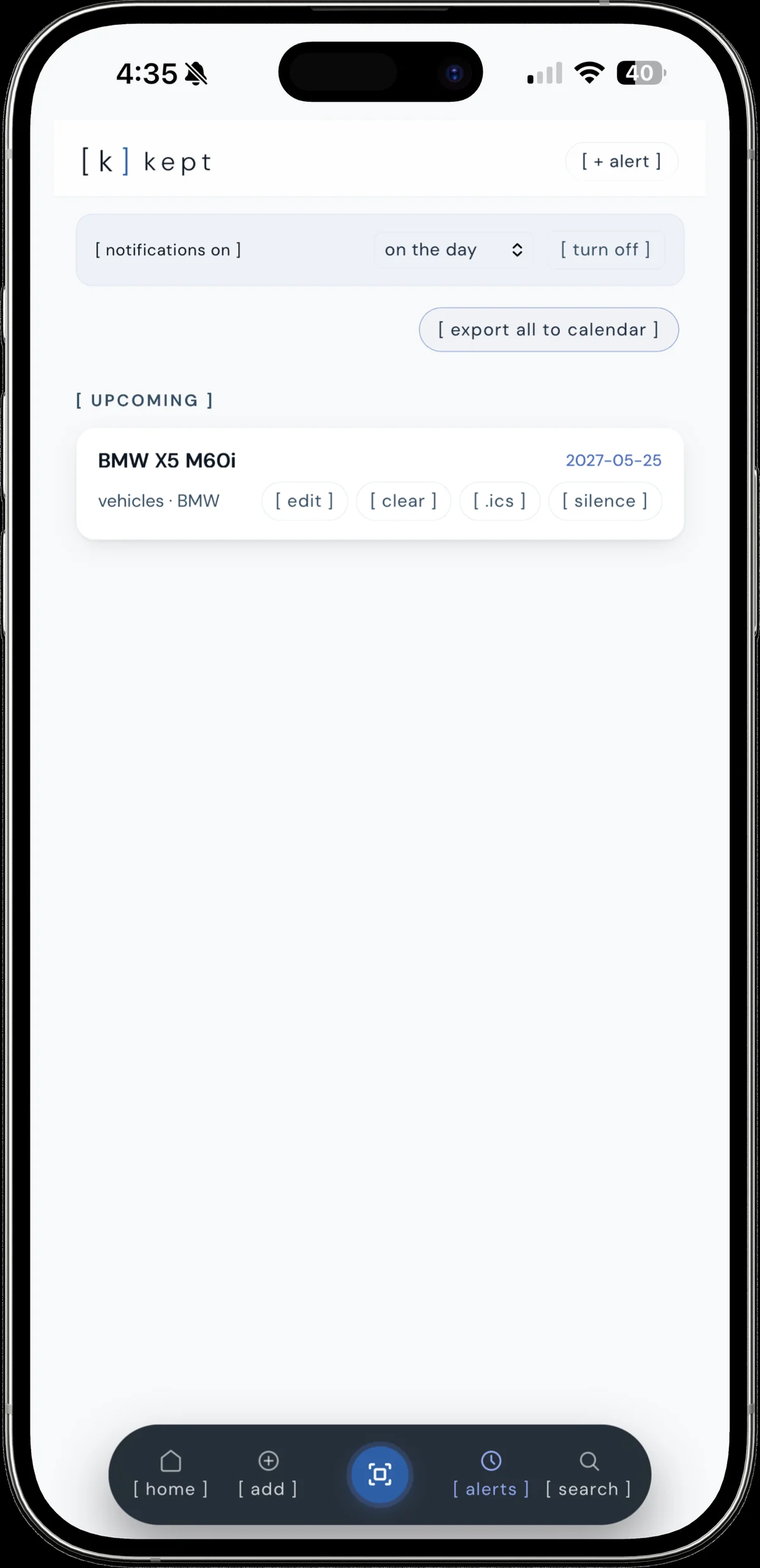
next service lives in the same reminder calendar as the rest of your stuff.
kept is reader-supported. When you buy through links on this page we may earn a small commission, at no extra cost to you. It never changes what we recommend.
"when was my last oil change?" answered in two seconds
kept keeps your car's service history, specs, and reminders with everything else you own. Ask it a question, get the date and mileage back.
[ try kept free ]Frequently asked questions
How do I keep track of my car's maintenance history?
Pick one place and put everything in it: every oil change, rotation, repair, and inspection, each with the date, mileage, cost, and who did the work. A phone-based system beats paper because it's always with you at the shop and can't be left in a traded-in glovebox. In kept, you add your car once, then add each service to its log in about 30 seconds; the history stays searchable and backed up.
What should be included in a vehicle maintenance log?
Each entry needs four things: the date, the odometer reading, what was done, and what it cost. Add the shop's name for warranty and dispute purposes. The log itself should also hold your VIN, tire size, oil type and capacity, and battery group size, since those are the specs every parts counter asks for. Receipts matter too: photograph them and attach them to the entry.
What is the best app to track car maintenance?
The best app is the one that also holds the rest of your stuff, because single-purpose car apps get abandoned. kept tracks any item you own, including vehicles: add your car, log each service with date, mileage, and cost, attach receipt photos, and set reminders for the next oil change. Free on any phone, and the same app already tracks your appliances, warranties, and home details.
How often should you check or log vehicle mileage?
Log mileage every time service happens, at minimum. That's the number that anchors every maintenance interval. If you track mileage for taxes or a lease cap, a quick monthly odometer photo takes ten seconds and gives you a clean record. Between services, modern cars mostly track themselves; the log exists so the history survives the car's dashboard.
Does a maintenance log increase the resale value of a car?
Yes, documented service history is one of the few things a private seller can control. Buyers pay more, and negotiate less, when a seller can show every oil change with dates and mileage, because the record removes the biggest used-car fear: hidden neglect. A complete log also strengthens warranty claims while you own the car, since manufacturers can deny coverage when required maintenance can't be proven.