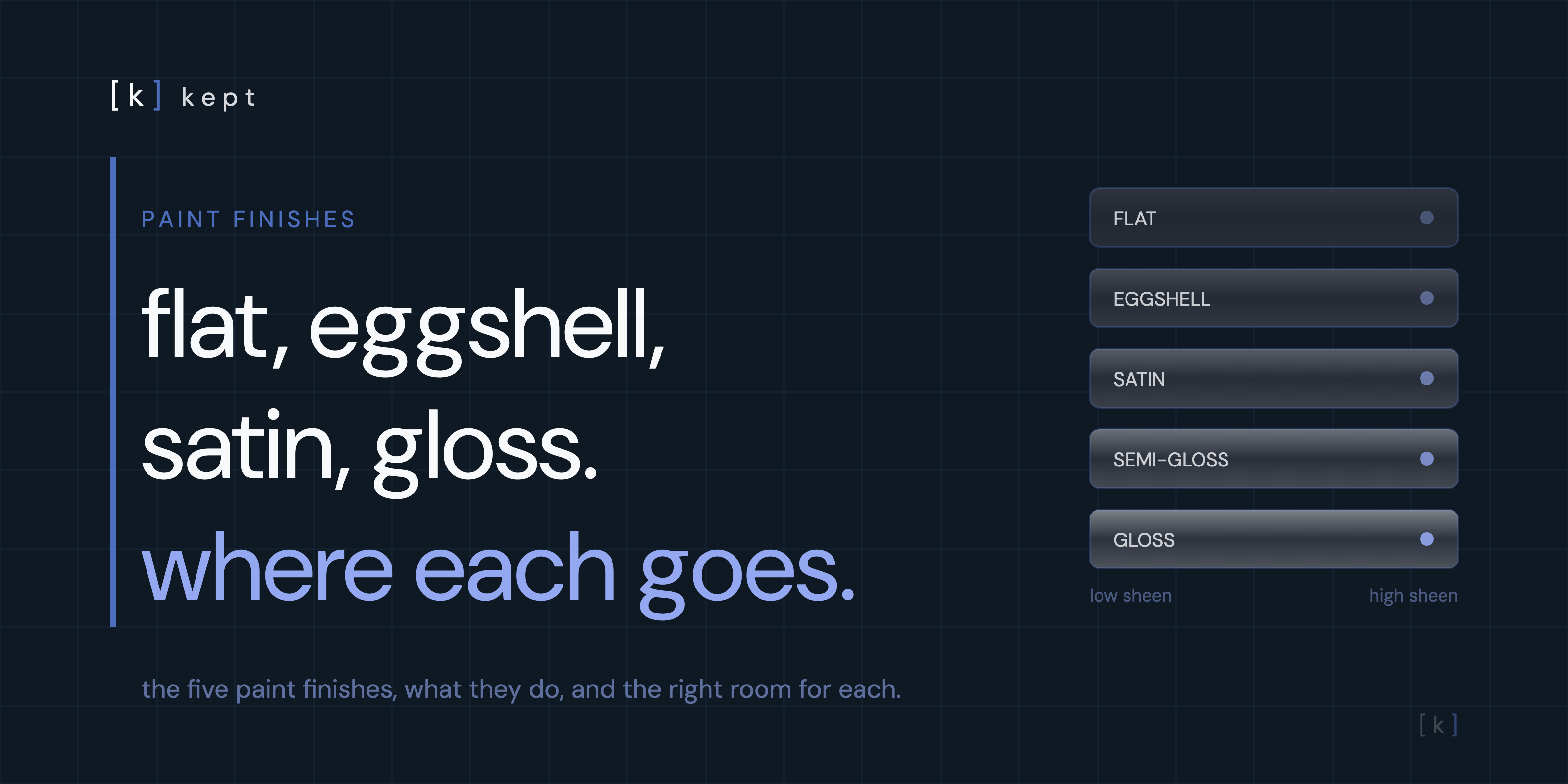
Paint Finishes: Flat, Eggshell, Satin, Semi-Gloss, Gloss
The color gets all the attention. The finish is what decides whether the wall wipes clean, hides its flaws, and survives the hallway. Here's what each sheen does and where it belongs.
table of contents
The sheen scale: flat to gloss
"Finish" and "sheen" mean the same thing: how much light the dried paint reflects. It runs on a scale. At one end is flat, which throws back almost no light. At the other is high-gloss, which is nearly a mirror. Eggshell, satin, and semi-gloss sit in between, in that order.
That one property drives everything else. The higher you go on the scale, the tougher and more washable the paint gets, and the more it shows every bump and patch in the wall. The lower you go, the better it hides flaws, and the harder it is to scrub without leaving a mark. There is no best finish, only the right one for the surface and the room.
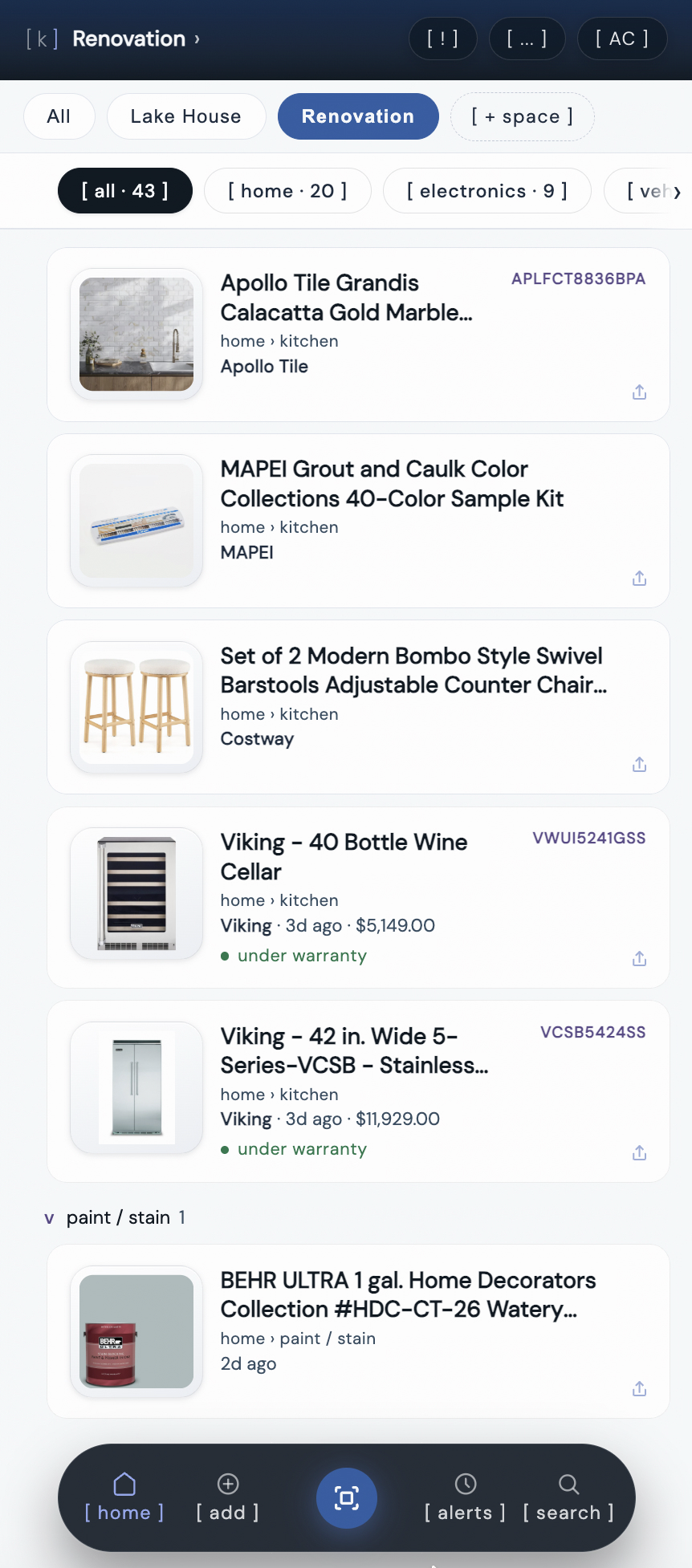
kept keeps paint in its own category, next to everything else you own, so the can in the basement isn't your only record.
The five finishes, one by one
Flat (matte)
No shine at all. Flat holds the most pigment and the least binder, so it covers in fewer coats and hides drywall seams, nail pops, and roller marks better than anything else. The trade-off is durability: scrub a flat wall and you can burnish a shiny spot into it. Best for ceilings, formal rooms, and older walls with a lot of history.
Eggshell
A soft, low sheen, named for the faint glow of an actual eggshell. It is the most popular wall finish for a reason: it still hides minor flaws but cleans up better than flat. Good for living rooms, bedrooms, and dining rooms that see normal wear but not constant scrubbing.
Satin
A gentle, pearl-like sheen and the most versatile finish on the scale. Satin resists moisture, scuffs, and stains better than eggshell and wipes down without much fuss, which is why it covers so much ground in real homes. The catch: on a wall that already has dents or patches, satin's extra reflectivity makes them more obvious, not less.
Semi-gloss
A clear, noticeable shine that beads water and takes repeated cleaning. This is the workhorse for trim, doors, baseboards, cabinets, and the walls of bathrooms, kitchens, and laundry rooms. The shine defines edges, so semi-gloss trim against an eggshell wall gives you that crisp, finished line.
High-gloss
The shiniest and hardest of them all, almost like glass. High-gloss is built for surfaces that get touched and cleaned constantly: front doors, cabinets, railings, and accent trim. It shows every imperfection underneath, so the prep work has to be near perfect. Most homes use it sparingly, as a finishing touch rather than a whole-room choice.
do you actually know what's on your walls right now?
Most people remember the color and forget the sheen. kept lets you save the color code and the finish per room, so the next can you buy is a real match, not a guess.
[ try kept free ]Which finish goes in which room
Match the finish to how hard the surface gets used. Wet rooms and high-traffic surfaces want higher sheen for cleanability. Big quiet walls and ceilings want lower sheen to stay forgiving. Here's the short version that covers most homes.
| Surface | Recommended finish | Why |
|---|---|---|
| Ceilings | Flat | Hides seams, kills overhead glare |
| Bedrooms, living rooms | Eggshell | Soft look, hides minor flaws |
| Hallways, family rooms | Satin | Takes traffic, wipes clean |
| Bathrooms, kitchens | Satin or semi-gloss | Resists moisture and stains |
| Trim, doors, baseboards | Semi-gloss | Durable, crisp edges, washable |
| Cabinets, front door | Semi-gloss or high-gloss | Hardest wearing, easy to clean |
One exception worth knowing: a bathroom ceiling that takes real steam often does better with a flat paint made with mildew resistance than with a glossier one. When you move into a new place, this is one of the details worth gathering early, right alongside the other things to record about a new house.
kept is reader-supported. When you buy through links on this page we may earn a small commission, at no extra cost to you. It never changes what we recommend.
you painted the trim three years ago. what sheen was it?
Save the room, the color code, and the finish in kept once. Next touch-up, it's a two-second search instead of a guess at the store.
[ try kept free ]Why higher sheen lasts longer (and shows more)
The reason a glossier paint cleans up better isn't magic, it's the recipe. Higher-sheen paints carry more binder, the resin that makes a coat hard and flexible, and less pigment. More binder means a tougher film that shrugs off scuffs, fingerprints, and water. That same tight, reflective film is also why gloss telegraphs every dent and patch underneath it.
This is the whole reason finish matters when you touch up. The same color in a different sheen looks like a different color, because the two surfaces bounce light differently. Brush satin over an eggshell wall and the patch flashes the moment sun hits it. Getting an invisible repair means matching the color and the finish, which starts with knowing the paint code and the sheen you used. If the can is long gone, our guide on reading paint codes on any brand covers how to recover the color.
Record the finish, not just the color
Here's the mistake almost everyone makes. They write down "kitchen: Agreeable Gray" and stop. Two years later they buy a gallon of Agreeable Gray in satin, roll it onto an eggshell wall, and the touch-up stands out like a sticker. The color was right. The finish wasn't.
A complete paint record is four things: the room, the brand and color code, the finish, and ideally the date. That's the version that actually saves you a repaint. kept stores it the same way it stores the rest of your home: model numbers, warranties, and which appliances you've registered all live in one searchable place, so the paint detail isn't stranded on a lid in the garage.
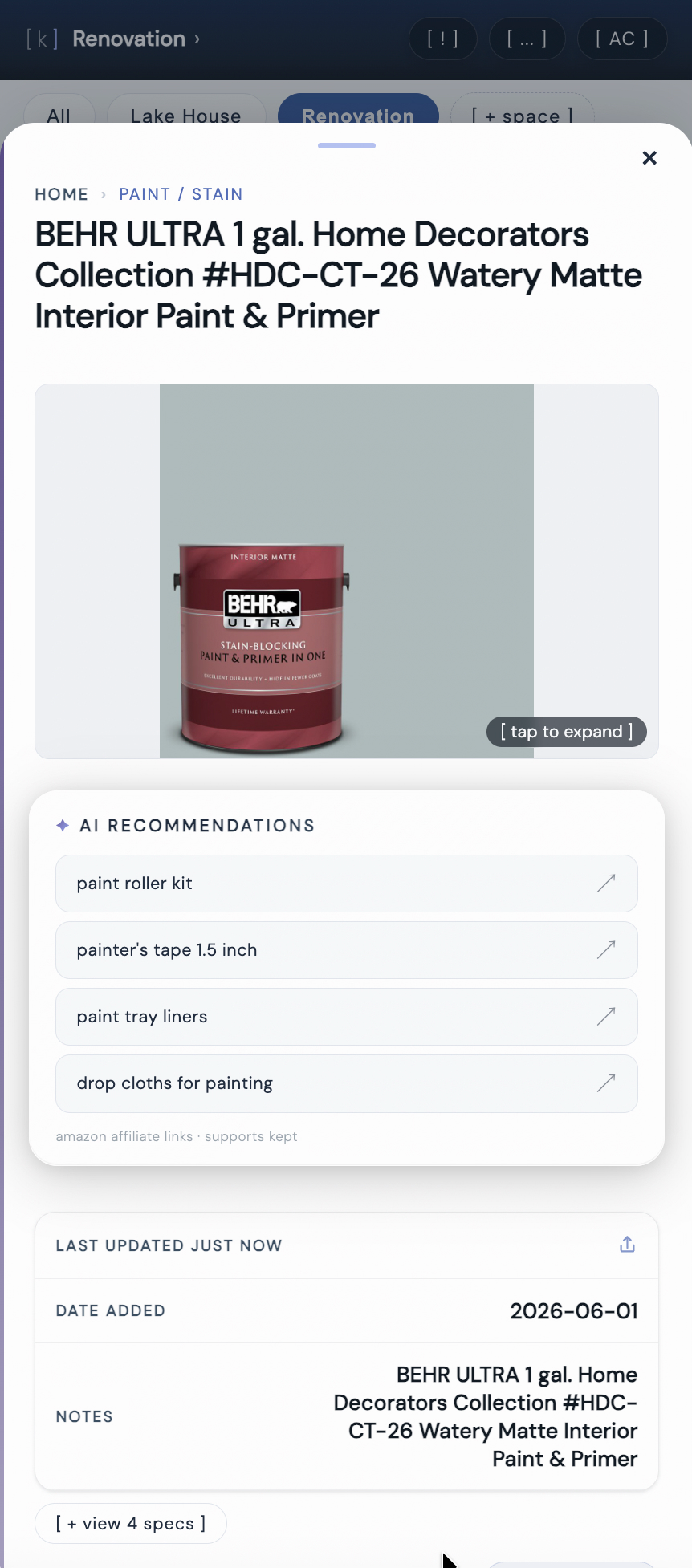
one paint in kept: brand, the full code, and the finish (matte) saved on the item itself, not your memory.
If you want a simple system for this beyond paint, our guides on keeping track of home improvements and things to remember about your house cover what else is worth writing down once and never hunting for again.
Frequently asked questions
What are the paint finishes in order from least to most shiny?
From lowest sheen to highest: flat (also called matte), eggshell, satin, semi-gloss, then high-gloss. As the sheen goes up, the paint reflects more light, resists scuffs and moisture better, and wipes clean more easily, but it also shows wall imperfections more.
What is the difference between eggshell and satin paint?
Satin has a slightly higher sheen than eggshell and holds up better to cleaning, moisture, and high traffic, which makes it the more versatile wall finish. Eggshell has a softer, lower sheen that hides bumps and patches better, so it suits low-traffic walls and rooms where you want a flatter look. On an already scuffed wall, eggshell conceals the damage; satin would reflect light and make it more obvious.
What paint finish is best for bathrooms and kitchens?
Use satin or semi-gloss on bathroom and kitchen walls, since both resist moisture and wipe clean. Semi-gloss is the standard for trim, doors, and cabinets in those rooms. For a bathroom ceiling that takes a lot of steam, a flat paint formulated with mildew resistance is often the better pick.
What finish should I use on ceilings and trim?
Ceilings almost always get flat paint. It hides drywall seams and roller marks and kills the glare from overhead lights. Trim, baseboards, doors, and crown molding get semi-gloss, which is durable, wipes clean, and gives those edges a crisp line against the flatter walls.
Does the paint finish need to match when I touch up a wall?
Yes. The exact same color in a different sheen reads as a different color, because the two surfaces bounce light differently, and the patch will flash when light hits it. To get an invisible touch-up you need the color and the finish to match, which is why it's worth recording both, not just the color code.