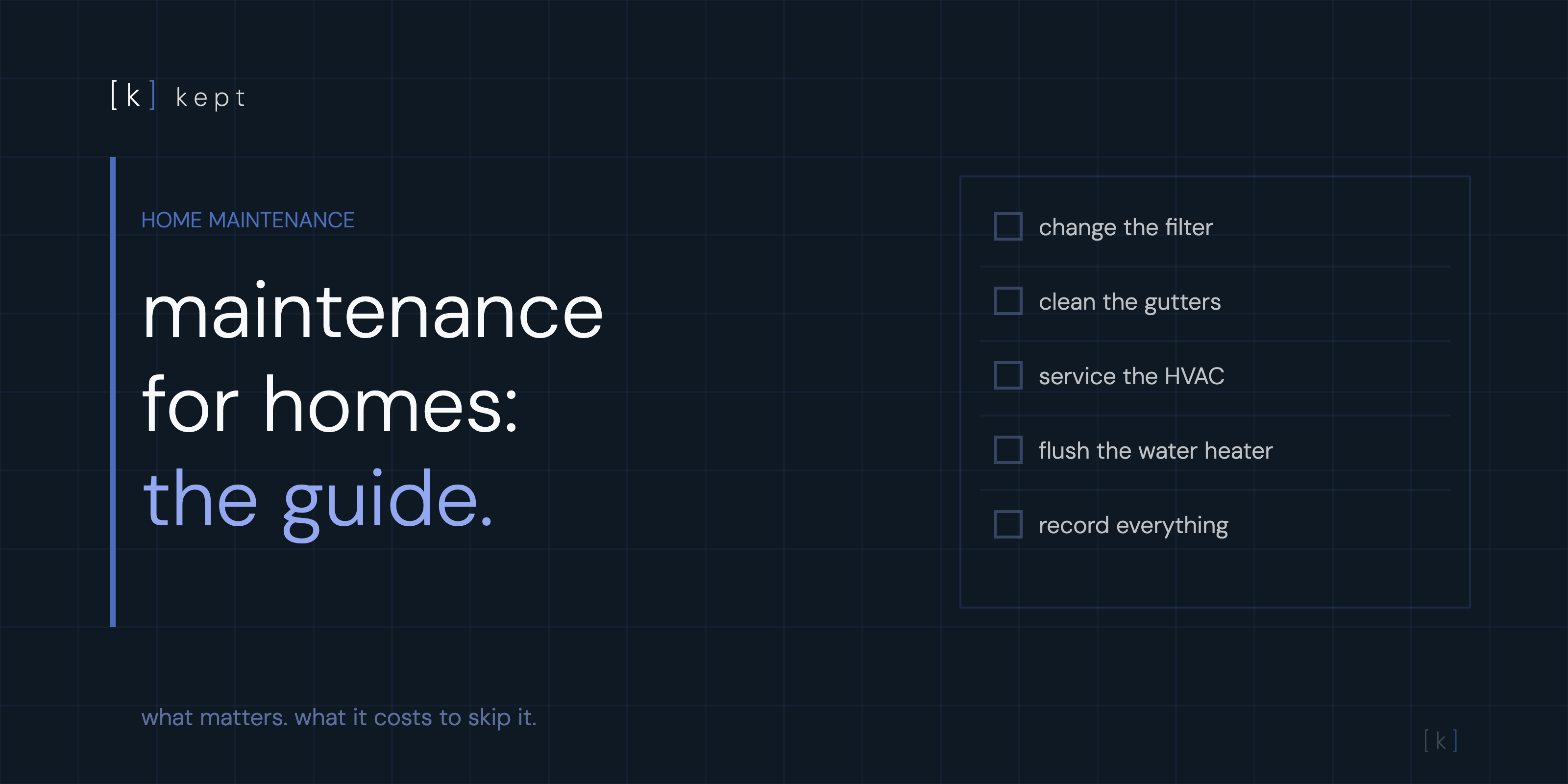
Home Maintenance: The Complete Guide for Homeowners
What your house actually needs, what it costs when you skip it, and how to build a maintenance system you'll actually use.

table of contents
Owning a home is a long game. The decisions you make in year two — or don't make — show up in year eight. A well-maintained house costs less to own, holds its value better, and doesn't ambush you with $12,000 emergencies. A neglected one does all three.
This is the complete guide: what matters, what it costs, and how to build a system that keeps your house in good shape without it taking over your life.
Why home maintenance matters more than people think
Most people understand maintenance intellectually. The problem is urgency — a furnace that works feels fine, even if the filter hasn't been changed in 14 months. A gutter that looks clear enough. A caulk line that's cracked but hasn't leaked yet.
The pattern in home ownership is consistent: the tasks that feel optional when things are working become emergencies when they stop. And emergencies are always more expensive than maintenance, always happen at inconvenient times, and often cascade into adjacent damage that preventive care would have avoided entirely.
A $25 filter protects a $10,000 HVAC system. A $200 annual HVAC service appointment extends equipment life by years. A $5 tube of caulk prevents $3,000 in water damage. The math on maintenance is almost always obvious — after the fact.
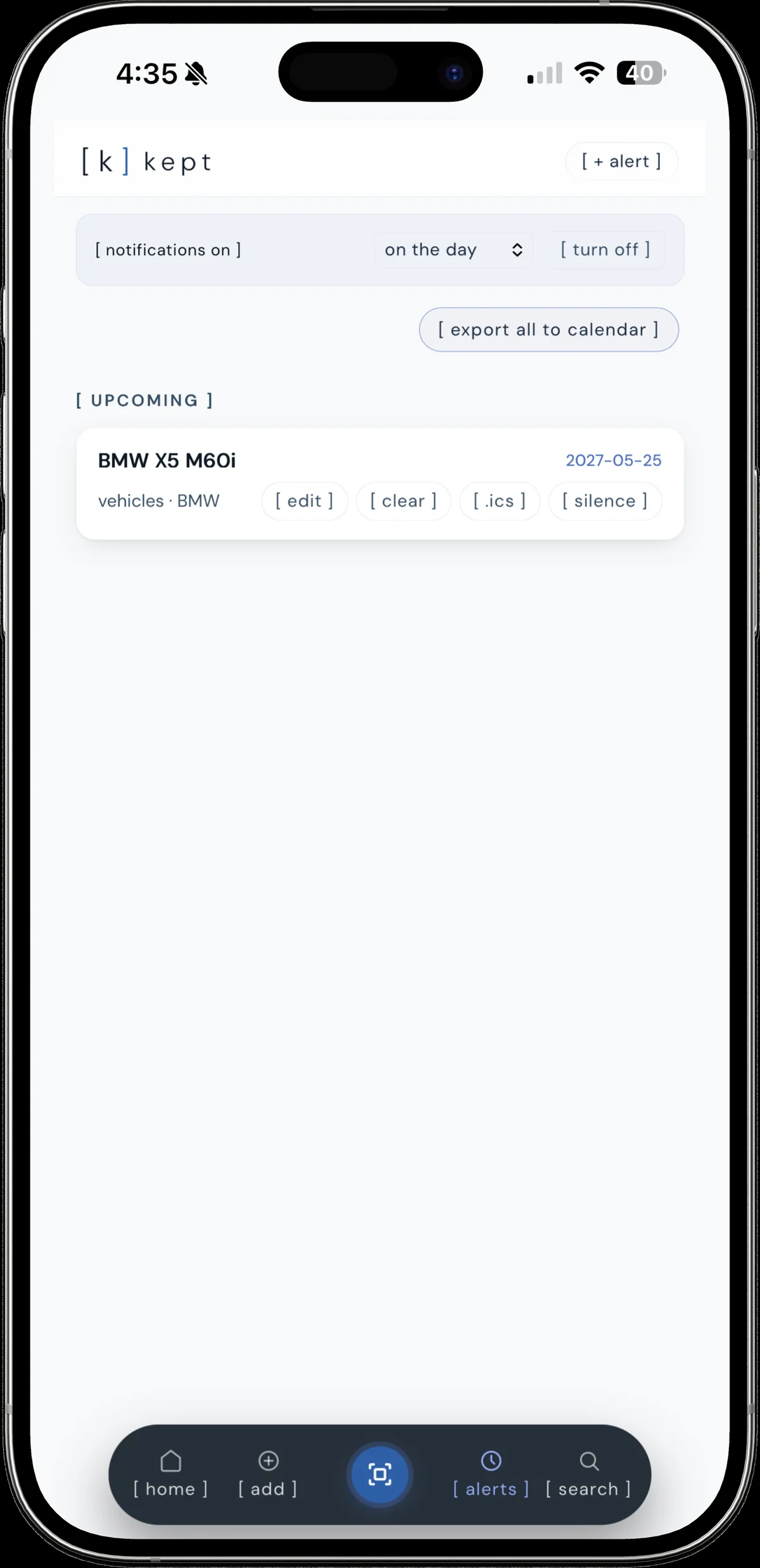
the math only holds up if something reminds you before it's urgent.
The systems that matter most
Not all maintenance is equal. These five systems account for the majority of major home repair costs when they fail — and all of them respond well to regular care.
HVAC (heating and cooling)
Replacement cost: $5,000–$15,000. Maintenance: change the filter every 1–3 months, annual professional service. A well-maintained system lasts 20–25 years. A neglected one: 12–15. The filter is the single highest-leverage maintenance task in the house.
Roof
Replacement cost: $8,000–$25,000. Maintenance: annual visual inspection, prompt repair of damaged or missing shingles, keeping gutters clear. Ignoring a $300 flashing repair can turn into $8,000 of interior water damage within a year.
Water heater
Replacement cost: $800–$2,500. Maintenance: annual anode rod inspection and sediment flush, monitoring for rust or unusual sounds. Most water heaters give warnings before they fail — rust-colored water, rumbling, visible corrosion at connections.
Foundation and drainage
Repair cost: $3,000–$30,000+ depending on severity. Maintenance: keep gutters clean and directed away from the foundation, maintain grading that slopes away from the house, seal cracks promptly. Water is the enemy of foundations and it always finds the path you left open.
Plumbing
Prevention is mostly about awareness: know where your main shutoff is, check under sinks regularly, watch for slow drains (early warning of blockages), and don't ignore dripping faucets. A dripping faucet wastes thousands of gallons a year and the slow leak under the sink warps the cabinet floor long before you notice it.
What deferred maintenance actually costs
The numbers here are real ranges based on common repair scenarios:
| Skipped task | Preventive cost | Repair cost when neglected |
|---|---|---|
| HVAC filter changes | $10–25 every 1–3 months | $300–$1,500 for blower motor or heat exchanger |
| Annual HVAC service | $100–$200/year | $5,000–$15,000 premature system replacement |
| Gutter cleaning | $100–$200/year (or DIY) | $1,500–$10,000 foundation or fascia damage |
| Dryer vent cleaning | $80–$150/year (or DIY) | House fire risk; remediation $5,000+ |
| Roof inspection/minor repair | $200–$500 | $3,000–$25,000 water damage and roof replacement |
| Caulking windows and doors | $20–$50 DIY | $500–$3,000 moisture damage and mold remediation |
| Water heater flush | DIY annually | $800–$2,500 premature replacement |
The highest-priority maintenance tasks
If you're starting from zero or getting back on track after falling behind, do these first:
- Change the HVAC filter. Right now, if you don't know when it was last done.
- Test every smoke and CO detector. Replace batteries. Replace units older than 10 years.
- Clean the gutters. If you're not sure when it was done last, assume it needs doing.
- Schedule an HVAC service appointment. If the system hasn't been serviced in over a year, book it.
- Check under every sink. Look for staining, softness, or active drips.
- Locate and test your main water shutoff valve. Know exactly where it is and that it turns.
That's one afternoon. Everything else can layer in from there.
What to DIY vs. hire out
Most homeowners can handle more than they think. The line is roughly: anything involving electricity beyond replacing a switch or outlet, anything involving the main gas or water supply, roof work beyond cleaning, and structural assessment. Everything else is mostly about willingness to learn.
- DIY-friendly: filter changes, gutter cleaning, caulking, weatherstripping, painting, basic plumbing (faucets, toilets, drain clearing), deck sealing, detector replacement
- Hire out: HVAC service, electrical panel work, roof repair, foundation assessment, gas line work, main water line, and anything requiring permits
Shop: homeowner maintenance essentials on Amazon
What records to keep
The maintenance record is the part most homeowners skip — and the part that matters most when you're selling, filing an insurance claim, or trying to figure out why something is failing.
Keep records of:
- Appliance model numbers, serial numbers, and purchase dates
- HVAC service dates and what was serviced
- Roof age and any repairs made
- Water heater age and last flush date
- Paint colors and codes for every room
- Filter sizes for furnace, AC, water, and refrigerator
- Contractor names, phone numbers, and what they worked on
- Warranty documents for appliances and systems
- Any permits pulled for renovations or additions
Building a maintenance system that works
The reason home maintenance falls behind isn't that homeowners don't care — it's that there's no system. Things that aren't on a schedule don't get done. Things that get done aren't recorded. And when something breaks, nobody can find the contractor's number or remember when the system was last serviced.
A functional maintenance system has three parts:
- A schedule. Recurring reminders for filter changes, seasonal tasks, and annual service appointments. Your phone's calendar works fine for this.
- A record. Somewhere to log when things were done. The date, what was done, and who did it.
- A reference. Somewhere to store the specs — model numbers, filter sizes, paint codes, contractor contacts — so you have them the moment you need them.
kept is the reference layer — all your home's information in one place, accessible in seconds. Pair it with calendar reminders for the schedule, and you have a complete system without any complicated spreadsheets.
kept logs every service task with dates and costs so you can spot patterns before they become problems.
[ try kept free ]frequently asked questions
What is the most important home maintenance task?
Changing HVAC filters on schedule is the highest-impact, lowest-cost maintenance task. It protects a $5,000–$15,000 system for the price of a $10–$25 filter. After that: cleaning gutters to prevent water damage, and keeping smoke and CO detectors functional.
How often should a house be maintained?
Some tasks are monthly (HVAC filter check, detector test), some seasonal (gutter cleaning, HVAC service, weatherstripping), and some annual (dryer vent cleaning, water heater flush, chimney inspection). The key is having a schedule and recording when things are done — not relying on memory.
What happens if you don't maintain your home?
Deferred maintenance compounds. A clogged gutter becomes foundation damage. A skipped HVAC service becomes a failed heat exchanger. A missed roof inspection becomes interior water damage. Small preventive costs avoided become large emergency costs realized — usually at the worst possible time.
What should every homeowner know how to do?
Every homeowner should know: where the main water shutoff is, how to reset a tripped circuit breaker, how to change an HVAC filter, how to test a smoke detector, how to caulk a gap, and how to shut off the gas in an emergency.
What records should homeowners keep?
Keep records of appliance model numbers and ages, warranty documents, HVAC service history, contractor contacts for every major repair, paint colors for every room, roof and water heater ages, and any permits pulled for renovations. This information is essential for repairs, insurance claims, and resale.