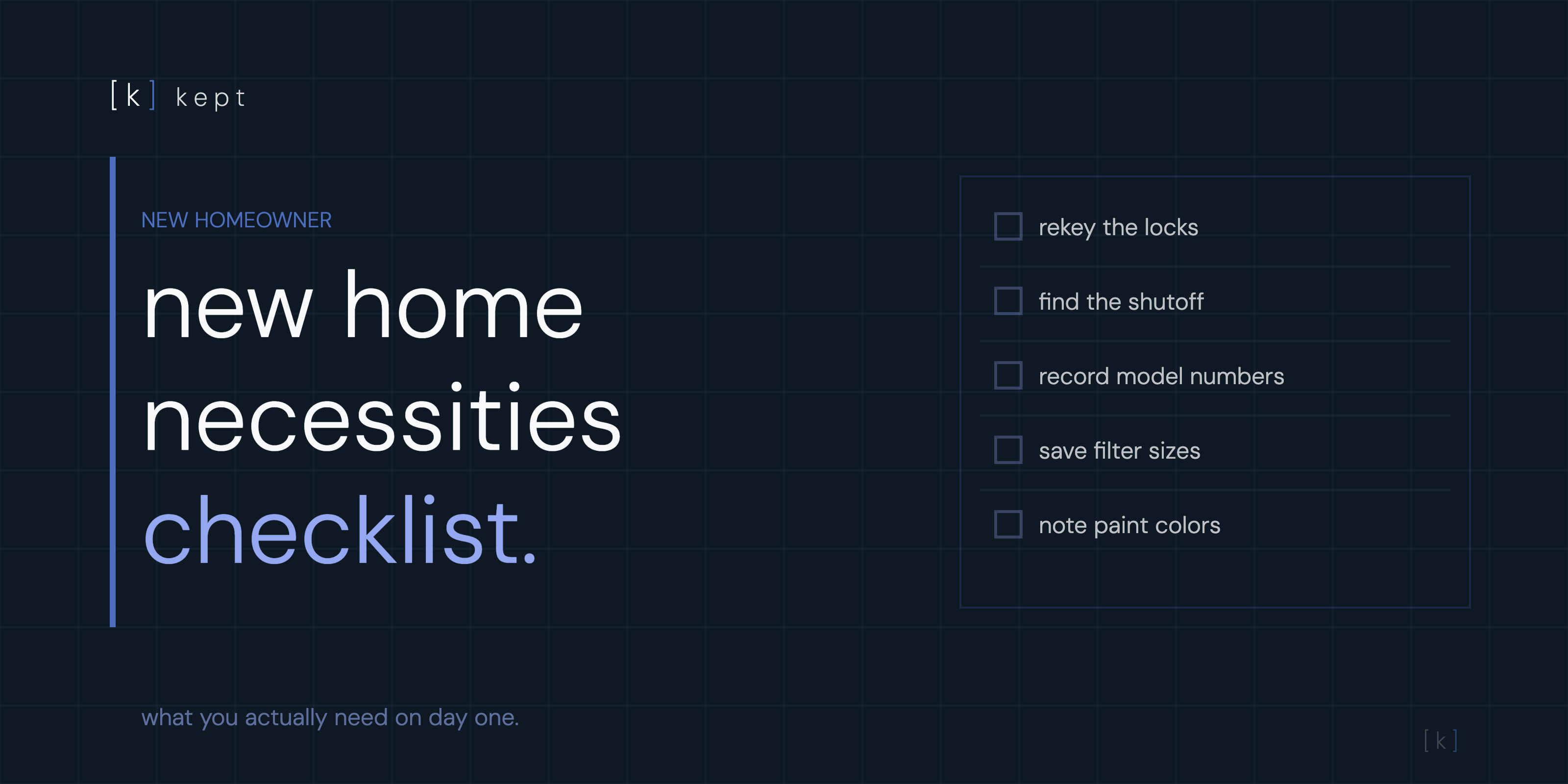
New Home Necessities: What You Actually Need When You Move In
Most new home checklists are full of things you don't need yet. This one isn't.

table of contents
Moving into a new house is a blur. Boxes everywhere, a dozen things happening at once, and you're trying to figure out where the circuit breaker is while someone's on the phone about your internet setup. The last thing you need is a 200-item checklist.
Here's what you actually need, organized by what you'll reach for first. Still house-hunting? Read what to look for when buying a house before you close. Already under contract? Our new house essentials checklist pairs buying lists with the information you need to gather.
Safety and security — day one
Before anything else, handle these. They're the ones that matter when something goes wrong at 2am.
- Rekey the locks — You don't know who has copies of the keys. A locksmith can rekey all your deadbolts for less than $100. Do it before your first night.
- Locate the main water shutoff — Find it now, not when a pipe bursts. It's usually in the basement, utility room, or outside near the foundation.
- Locate the electrical panel — Know where it is and label the breakers if they aren't already.
- Test smoke and CO detectors — Replace batteries on anything that looks old. If the house didn't come with CO detectors, buy them now.
- Get a fire extinguisher — One for the kitchen, one for the garage if you have one.
- Buy a flashlight — Something with fresh batteries that lives in a known spot.
Shop: combination smoke and CO detectors on Amazon
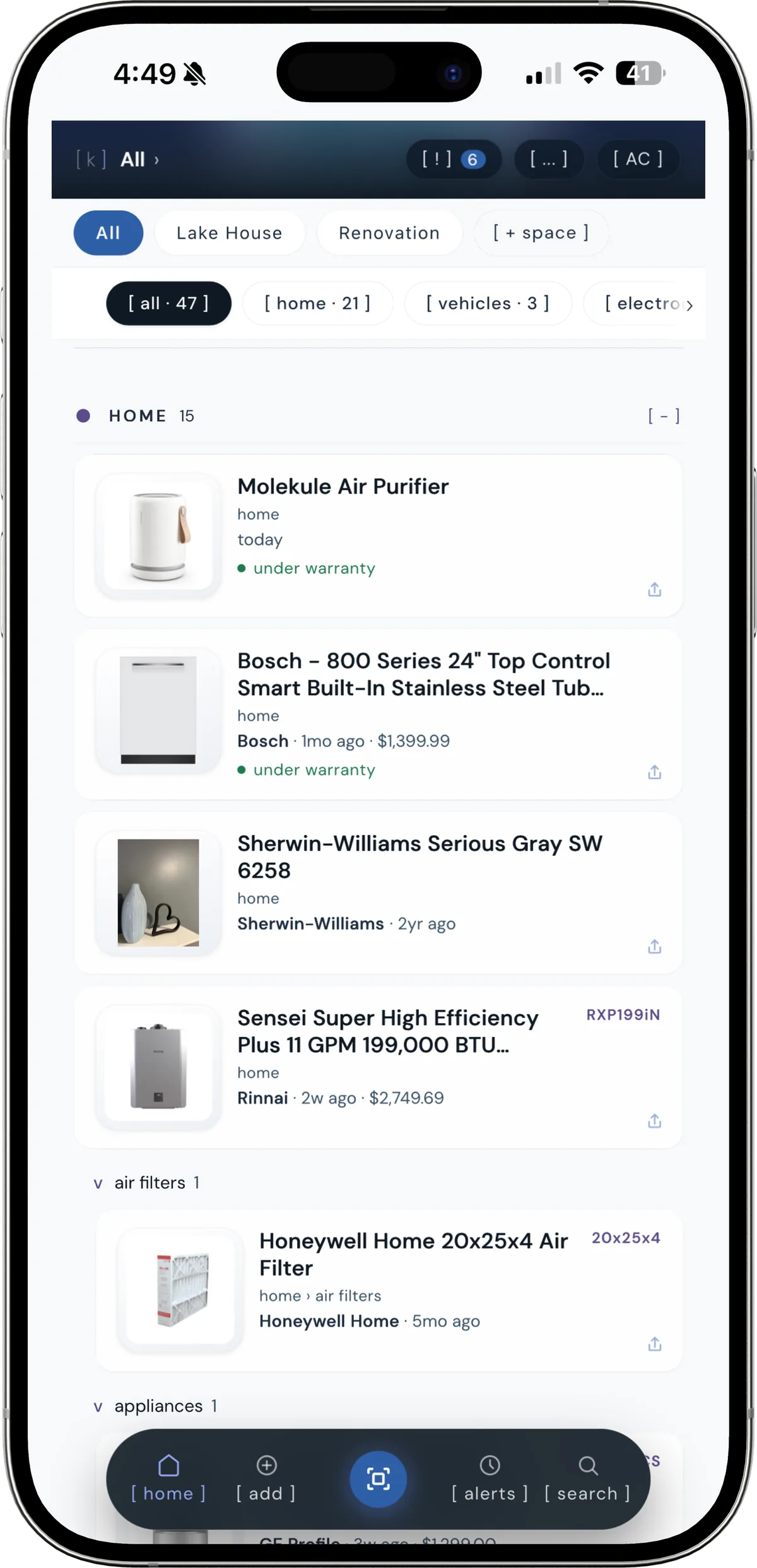
as you buy things this first week, save them. it takes longer to remember later than to log now.
Tools you'll actually use
You don't need a full workshop. You need enough to hang things, fix things, and not be helpless when something breaks.
- Hammer
- Flathead and Phillips screwdrivers (or a multi-bit)
- Tape measure — 25 ft minimum
- Level — a basic 24" one works for 90% of tasks
- Cordless drill with a basic bit set
- Stud finder
- Adjustable wrench and pipe wrench
- Plunger — both a cup plunger (sinks) and a flange plunger (toilets)
- Utility knife
- A roll of painter's tape
Shop: homeowner starter tool kits on Amazon
Cleaning supplies
Clean the house before you unpack — it's much easier before furniture is in the way. Basic kit:
- All-purpose cleaner
- Glass cleaner
- Bathroom disinfectant
- Mop and bucket, or a spray mop
- Broom and dustpan
- Vacuum — even a basic one
- Microfiber cloths
- Garbage bags in multiple sizes
- Paper towels
Kitchen basics
You don't need everything on day one. You need enough to eat and make coffee while you're unpacking everything else.
- Coffee maker or kettle
- One good pan and one pot
- Basic knife and cutting board
- Can opener
- Dish soap, sponge, drying rack
- Dish towels
- A few bowls and plates to get you through the first week
What to record before you forget
This is the part most people skip — and regret later. The first few days in a new house are the only time you'll naturally encounter all of this information. Write it down.
- Furnace filter size — It's printed on the filter itself. Write it down now.
- Water heater age and model — On the label on the tank. Useful for knowing when to replace it.
- Paint colors in each room — If the sellers left cans, photograph the lids. If not, ask them.
- Appliance model numbers — On stickers inside doors, on the back of units. Record all of them.
- Utility account numbers — Gas, electric, water. You'll need them.
- HOA contact and rules — If applicable.
- Contractors who worked on the house — The sellers may know who did the roof, HVAC, or additions.
This information is hardest to find the moment you actually need it — when something breaks, when you need a repair, or when you're trying to sell the house years later.
Appliance model numbers and specs
Check these locations for model and serial numbers — before the appliances get pushed against walls:
- Refrigerator — Inside the door frame, upper left or right
- Dishwasher — Inside the door, on the left side edge
- Washer/dryer — Inside the lid, or on the back of the unit
- Oven/range — Inside the door frame or on the back
- HVAC/furnace — On the access panel door or inside the unit
- Water heater — On the label on the tank
Scan or photograph each one. Or use kept — scan the barcode on the appliance and it pulls the model, specs, and filter size automatically.
kept stores filter sizes, paint codes, model numbers, and shut-off locations before you forget where they are.
[ try kept free ]frequently asked questions
What should I buy first when moving into a new home?
Safety and function first: new door locks, a plunger, a basic toolkit, smoke and CO detectors, and a flashlight. These are the things you'll desperately need before your furniture is even unpacked.
What information should I record when moving into a new home?
Record the location of your main water shutoff, electrical panel layout, furnace filter size, paint colors in each room, appliance model numbers and serial numbers, and the name of any contractors who did recent work. This information is hard to find later and incredibly useful in an emergency.
Should I change the locks when I move into a new house?
Yes. You don't know how many copies of the keys exist. Rekeying is cheaper than a full lock replacement and is usually the first thing a locksmith recommends for new homeowners.
What tools do I need as a new homeowner?
Start with a hammer, flathead and Phillips screwdrivers, a tape measure, a level, a cordless drill, and a stud finder. That covers 90% of basic home tasks. Add a pipe wrench and a set of hex keys and you're set for a couple of years.
How do I find the model numbers for appliances in a home I just bought?
Most appliance model numbers are on a sticker inside the door, on the back of the unit, or on the underside. Check inside the refrigerator door frame, inside the dishwasher door, and on the back or bottom of the washer and dryer. Record them immediately — they're hard to find once the appliance is installed against a wall.